







Beyond Transcription: The Quest for Reusable AI Meeting Notes
Meetings are where ideas are born, problems solved, and decisions made. Yet, for all their importance, meeting notes often fall short—hastily scribbled, incomplete, or filed away, never to be seen again. Artificial Intelligence promises to revolutionize this by automating note-taking. While AI transcription and summarization tools have made significant strides, truly reusable AI meeting notes remain elusive for many teams.
The challenge isn’t just capturing every word; it’s transforming raw conversational data into actionable insights, clear decisions, assigned owners, and trackable follow-ups. It’s about creating a searchable repository of team knowledge that genuinely boosts productivity and reduces redundant discussions. This guide will walk you through a practical, human-centered approach to leveraging AI for meeting notes, ensuring they become a valuable asset rather than another digital artifact gathering dust.
We’ll explore how to move beyond basic automation to a system where AI assists in surfacing critical elements, and human intelligence refines them into a format that drives real outcomes. The goal is not to eliminate human involvement but to empower it, making the process of documenting and acting on meeting outcomes more efficient, accurate, and ultimately, more useful.
The Pitfalls of Pure Automation: Why “Set It and Forget It” Doesn’t Work
The allure of fully automated meeting notes is strong: imagine never worrying about who’s taking notes or missing important details. AI tools can record, transcribe, and even generate summaries. However, relying solely on these automated outputs often creates new problems:
- Generic Summaries: AI excels at keywords but struggles with nuance, context, and implicit agreements crucial in human conversations. Summaries can be too broad, missing the specific “who,” “what,” and “when” that make notes actionable.
- Lack of Prioritization: Not all spoken words carry equal weight. A human note-taker instinctively filters out small talk, focusing on key decisions and action items. AI, without careful prompting, treats all dialogue equally, leading to bloated, unfocused notes.
- Missed Intent and Nuance: Sarcasm, hesitation, or subtle shifts in tone convey significant meaning that a purely textual AI might miss. These nuances often inform the true intent behind decisions.
- Inconsistent Formatting: Automated summaries can vary wildly in structure and quality, making quick information extraction difficult. Consistency is key for reusability.
- “Garbage In, Garbage Out”: If the meeting is unstructured or lacks clear objectives, even advanced AI will produce disorganized notes. AI cannot magically create clarity from chaos.
The “set it and forget it” approach often results in notes that are technically complete but practically useless. They might be accurate transcriptions or decent summaries, but they lack the human touch that transforms raw data into actionable intelligence. This is why a balanced approach, where AI augments human effort rather than replaces it, is essential for truly reusable meeting notes.

What Makes Meeting Notes Truly Reusable? Defining the Gold Standard
Before diving into AI’s role, let’s clarify “reusable” meeting notes. These are living documents serving multiple purposes long after the meeting. They are:
- Actionable: Clearly state what needs doing, by whom, and by when.
- Searchable: Easily found and referenced by anyone, now or in the future.
- Concise: Get straight to the point.
- Contextual: Provide enough background for someone absent to understand decisions.
- Consistent: Follow a predictable structure for easy digestion.
- Decisive: Highlight key decisions and their rationale.
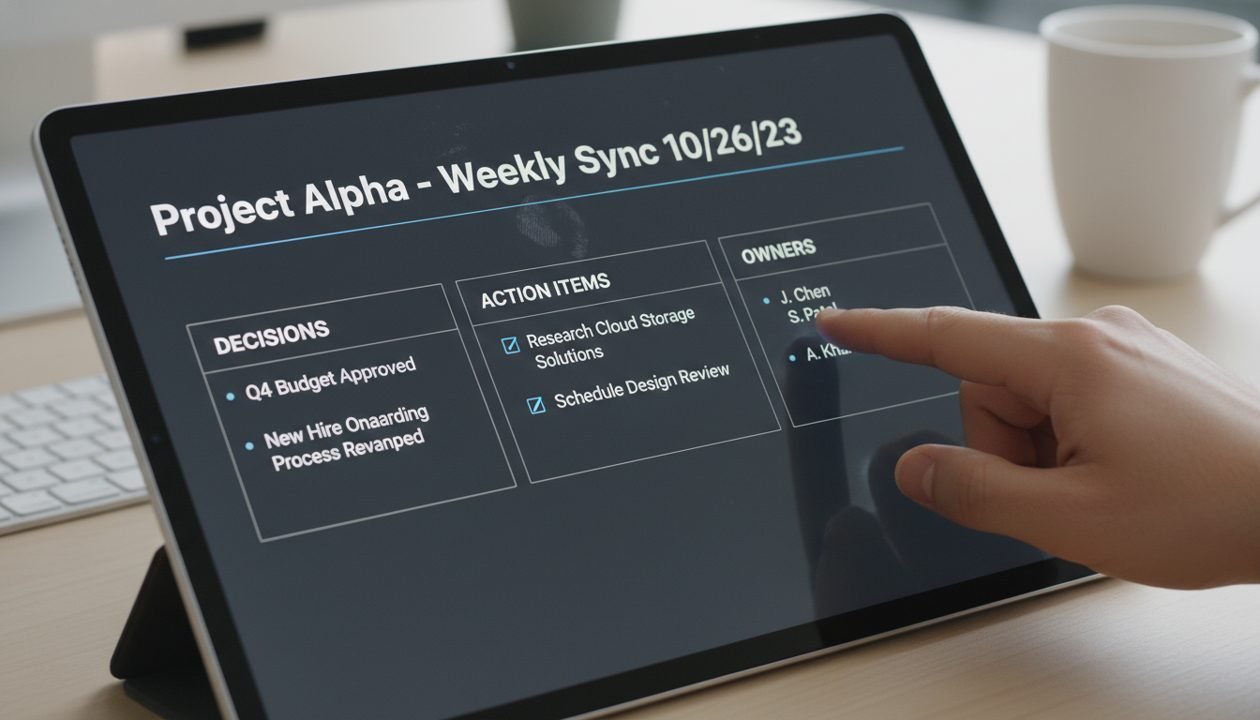
To achieve this, your notes should consistently capture four critical elements:
Decisions: The Core Outcome
Every productive meeting should lead to decisions. Reusable notes clearly articulate these, separating them from general discussion. This includes what was decided, why (briefly), and any alternatives considered. Without clear decisions, meetings often feel like discussions without resolution.
Owners: Assigning Responsibility
A decision without an owner is merely a wish. Effective notes explicitly assign responsibility for each action item or follow-up. This clarity prevents ambiguity and ensures accountability. It’s not enough to say “someone will do X”; it must be “John will do X.”
Follow-ups: Ensuring Momentum
These are specific tasks or next steps emerging from decisions. Each follow-up needs a clear description, an assigned owner, and a due date. This transforms discussion into progress and helps track project momentum. These are your action items.
Searchable Knowledge: Building a Team Brain
Beyond immediate actions, meeting notes contribute to your team’s collective knowledge base. They document historical context, decision rationale, and evolving strategies. Properly organized and tagged, these notes become a valuable resource for onboarding, resolving future disputes, or understanding project journeys. They prevent rehashing old discussions and allow quick retrieval of past agreements.
The Human-AI Partnership: A Balanced Approach to Note-Taking
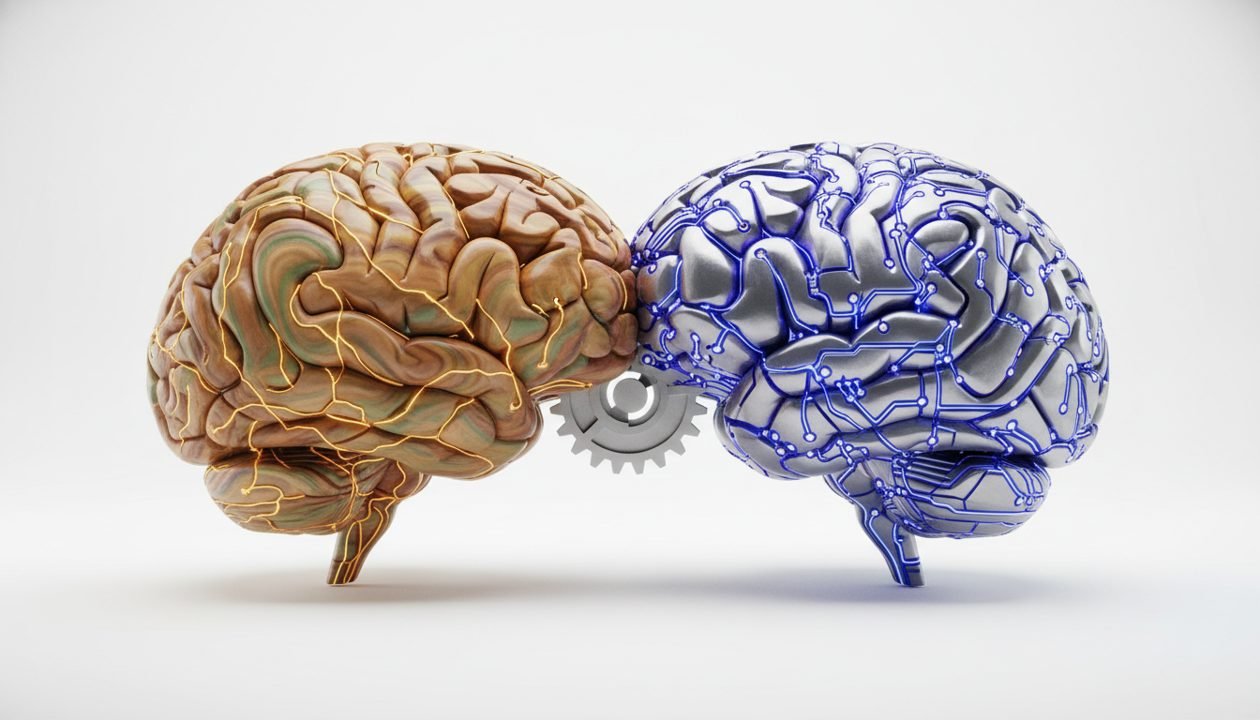
The most effective approach to AI meeting notes isn’t replacing humans, but creating a symbiotic relationship where each excels. AI handles transcription and initial summarization, freeing human intelligence for critical thinking, context, and refinement.
Think of AI as your diligent assistant, capturing everything and providing a first draft. Your role, as the human in the loop, is editor, curator, and strategic thinker. You bring understanding of team dynamics, project goals, and organizational context that AI lacks. This partnership allows you to:
- Save Time on Transcription: AI handles speech-to-text conversion, often with speaker identification.
- Get a First Pass Summary: AI quickly generates an initial summary, highlighting potential key points, providing a strong starting point.
- Focus on Meaning, Not Mechanics: Instead of typing furiously, you actively participate, listen for nuances, and mentally flag critical decisions and actions.
- Ensure Accuracy and Context: You review AI output, correcting errors, adding missing context, and ensuring the summary reflects true outcomes and intent.
- Structure for Reusability: You apply consistent structure, organizing notes around decisions, owners, and follow-ups, making them easy to digest and act upon.
- Integrate with Workflows: You can easily pull out action items and integrate them into project management tools or calendars.
This balanced approach ensures notes are accurate, comprehensive, highly actionable, and genuinely reusable, serving as a valuable asset for your team’s ongoing work.
Designing Your AI-Assisted Note Workflow: A Step-by-Step Guide
Implementing an effective human-AI workflow requires a structured approach. Here’s how to design a process that maximizes efficiency and utility:
Pre-Meeting Preparation
Note quality often begins before the meeting. AI can’t fix a poorly run meeting, but good preparation makes AI’s job—and yours—much easier.
- Define the Meeting Objective: Clearly state what you aim to achieve. This helps AI focus summarization and guides your human review.
- Create an Agenda: A structured agenda provides a roadmap. Share it in advance; it helps AI identify sections.
- Select Your AI Tool: Choose a transcription/summarization tool that integrates with your existing communication and collaboration platforms (e.g., video conferencing, project management).
- Inform Participants: Let everyone know an AI tool will record and transcribe. This ensures transparency and encourages clearer speech.
During the Meeting: Capturing Raw Data
While AI handles primary capture, your role is to guide the conversation and make mental notes of critical moments.
- Activate AI Recording/Transcription: Ensure your chosen AI tool is active and correctly capturing audio.
- Facilitate Clearly: Encourage clear articulation, avoid talking over others, and explicitly state decisions and action items. This significantly improves AI accuracy.
- Flag Key Moments (Recommended): Many AI tools allow “bookmarking” or “highlighting” moments. Use this to mark decisions, action items, or crucial points. This signals AI for summarization and helps you navigate the transcript later.
- Participate Actively: Since AI handles transcription, you are free to engage fully, listen critically, and contribute meaningfully.
Post-Meeting: AI’s First Pass and Human Refinement
This is where the human-AI partnership truly shines. AI provides raw material; you sculpt it into a reusable asset.
- Review AI-Generated Transcript: Skim the full transcript for major errors. Correct critical inaccuracies (names, terms, numbers).
- Analyze AI-Generated Summary/Highlights: Use the initial summary, key topics, or identified action items as a starting point.
- Extract and Structure Key Information: This is the most crucial human step. Systematically pull out:
- Decisions: What was decided? (e.g., “Proceed with Option B for Q3 marketing campaign.”)
- Owners: Who is responsible? (e.g., “Sarah will lead implementation.”)
- Follow-ups/Action Items: What specific tasks need doing? (e.g., “Sarah to draft campaign brief by Friday, July 14th.”)
- Key Discussion Points/Context: Briefly summarize essential background or rationale.
- Add Context and Nuance: Fill gaps AI missed. Clarify ambiguities, add unstated assumptions or important background.
- Format for Readability: Organize notes with clear headings (e.g., “Decisions,” “Action Items”), bullet points, and bold text for easy scanning.
- Integrate with Project Management: Transfer action items directly into your team’s project management software (e.g., Asana, Trello, Jira) or shared calendar.
Leveraging AI Tools Effectively (Without Over-Reliance)
The market is flooded with AI meeting assistants. Choose tools that complement your workflow and understand their limitations. Focus on categories of features:
- Transcription Accuracy: Prioritize high accuracy, especially for your industry’s jargon. Test in your typical meeting environment. Human review is always necessary.
- Speaker Identification: Invaluable for understanding who said what, aiding action assignment and discussion tracking.
- Summarization Capabilities: Look for tools generating different summary types (executive, action item list). Use these as a starting point. Prompting AI with specific questions (e.g., “What were the 3 key decisions?”) yields better results.
- Integration with Collaboration Platforms: Tools integrating directly with video conferencing (Zoom, Google Meet, Teams) and project management streamline the process.
- Search and Playback: Ability to search transcripts for keywords and jump to specific recording points is crucial for revisiting discussions.
- Customization and Templates: Some tools allow custom templates, guiding AI to extract specific information (e.g., “Decision,” “Owner,” “Due Date”). This trains AI to meet team needs.
AI tools are powerful assistants, not substitutes for critical thinking. Treat their outputs as raw material needing human shaping and validation. Avoid simply copy-pasting AI-generated summaries without review.
Best Practices for Review, Refinement, and Distribution
Even with a robust human-AI workflow, notes aren’t truly reusable until properly reviewed, refined, and distributed. This final stage ensures accuracy, clarity, and accessibility.
Checklist for Effective Note Review
Before sharing your notes, run through this quick checklist:
- Accuracy Check: Are all names, dates, numbers, and technical terms correct?
- Clarity and Conciseness: Is the language clear and to the point? Is jargon or unnecessary filler removed?
- Completeness: Have all key decisions, owners, and action items been captured? Is there enough context for someone who wasn’t present?
- Actionability: Is it clear what needs doing, by whom, and by when? Are deadlines realistic?
- Consistency: Do the notes follow your team’s agreed-upon format and structure?
- Tone: Is the tone professional and objective?
- Searchability: Are relevant keywords, project names, and topics included for future searches?
Refinement Tips:
- Prioritize: For long meetings, focus refinement on critical sections first (decisions, action items).
- Use Standardized Terminology: Ensure consistent use of project names, roles, and technical terms for better searchability.
- Link to Resources: If a decision references a document or discussion, include direct links.
- Get a Second Pair of Eyes (Optional): For critical meetings, have another participant quickly review notes before final distribution.
Distribution Strategies:
Where and how you share notes is as important as their content.
- Centralized Location: Store notes in a shared, easily accessible location (e.g., Google Drive, Notion, Confluence). Avoid scattering them.
- Timeliness: Distribute notes as soon as possible, ideally within 24 hours, to keep information fresh and allow prompt action.
- Targeted Audience: Send notes to all participants and relevant stakeholders, even if they didn’t attend.
- Highlight Key Sections: In your distribution email, briefly highlight critical decisions and action items for immediate attention.
- Integrate with Project Management: Ensure action items are tracked in your team’s project management system.
Transforming Notes into Action and Knowledge: The Long-Term Play
The true value of reusable AI meeting notes lies in their long-term contribution to your team’s collective intelligence. Consistently producing high-quality, actionable notes builds a dynamic knowledge base.
Consider how these notes serve broader organizational goals:
- Onboarding New Team Members: A searchable archive provides invaluable context for new hires, helping them quickly understand project history and decisions.
- Reducing Redundant Discussions: When a question arises about a past decision, team members can quickly search notes to find the original discussion, rationale, and outcome, avoiding new meetings.
- Project Audits and Post-Mortems: High-quality notes are essential for thorough project reviews, identifying successes, failures, and reasons. They provide historical data for continuous improvement.
- Decision Tracking and Accountability: Over time, notes create a clear audit trail of decisions, responsibilities, and progress, fostering accountability and transparency.
- Strategic Planning: Analyzing trends and recurring themes in notes provides insights into operational patterns, identifies bottlenecks, and informs future strategic planning.
To maximize long-term value, consistently tag notes with relevant keywords, project names, and dates. Encourage active use of the search function in your knowledge base. Make it a habit to reference past notes in current discussions, reinforcing their value.