


The landscape of artificial intelligence is evolving at a breathtaking pace. Every week, new applications emerge, promising to revolutionize everything from creative work to daily chores. Yet, amidst the dazzling array of innovations and the inevitable hype cycles, a crucial question arises: how do you discern truly useful AI apps from fleeting novelties? For the curious reader seeking practical advice and actionable takeaways, this guide is designed to empower you to spot the next game-changing AI tool long before it graces mainstream headlines. We’ll explore a systematic approach to discovery, focusing on utility, potential, and real-world impact, helping you become an astute early adopter rather than a passive observer.
Beyond the Hype: Defining “Useful” AI
Before diving into discovery methods, it’s essential to establish a clear understanding of what constitutes “useful” AI. In a market saturated with tools that might seem impressive on the surface, true utility lies in an application’s ability to solve a genuine problem, enhance efficiency, unlock creativity, or make complex tasks more accessible. A useful AI app isn’t just technologically advanced; it’s a practical solution that integrates seamlessly into a workflow or personal routine, delivering tangible benefits.
Consider the difference between a novel parlor trick and a robust utility. An AI that generates a silly image might be amusing, but an AI that accurately transcribes spoken word into text, allowing for quick content creation or meeting summaries, offers profound utility. The latter addresses a common pain point, saves time, and provides a clear return on investment, whether that investment is time, money, or cognitive effort. Look for applications that simplify, automate, or augment tasks in a way that feels intuitive and impactful, rather than merely showcasing what AI can do.
The Hallmarks of Practicality:
- Solves a Specific Problem: It addresses a clear, identifiable need or pain point for a particular user group or industry.
- Enhances Efficiency: It significantly reduces the time, effort, or resources required to complete a task.
- Augments Human Capabilities: It allows users to achieve outcomes that would be difficult or impossible through traditional means alone.
- Offers Accessibility: It makes complex processes or specialized knowledge available to a broader audience.
- Provides Clear Value: Its benefits are easily quantifiable or demonstrably improve quality of life or work.
By framing our search around these principles, we can cut through the noise and focus our attention on AI apps with genuine potential.
Where to Look: Unconventional Discovery Channels
Relying solely on mainstream tech news outlets or product launches will often mean you’re already behind the curve. To spot useful AI apps before they go mainstream, you need to venture into the less-trodden paths of discovery. These are the places where developers, early enthusiasts, and niche communities congregate, often discussing tools in their nascent stages.
Beyond the Mainstream:
- Niche Online Communities and Forums: Platforms like Reddit host a myriad of specialized subreddits (e.g., r/MachineLearning, r/Productivity, r/SideProject, r/GPT3, r/StableDiffusion). Specific Discord servers dedicated to AI development, various programming languages, or even professional fields (e.g., AI for marketing, AI for design) are goldmines. These communities often feature developers sharing their projects for feedback, users discussing emerging tools, and early adopters exchanging insights.
- Academic Papers and Research Preprints: While often dense, platforms like arXiv or even university research pages can give you a glimpse into foundational technologies that will eventually power future applications. Keeping an eye on breakthrough research can provide a leading indicator for what kinds of applications are on the horizon.
- Developer Blogs and Open-Source Repositories: Many innovative AI tools begin as open-source projects. Following prominent AI researchers, developers, and companies on platforms like GitHub, Hugging Face, or their personal blogs can reveal early-stage projects and proof-of-concepts that might evolve into full-fledged applications.
- Specialized Newsletters and Curated Lists: Seek out newsletters that focus on specific AI niches (e.g., AI for writing, AI for coding, AI for art). These are often curated by experts who spend their time sifting through new releases and research, providing a more refined signal than broad tech news.
- Early Access Programs and Beta Testing Platforms: Many promising AI apps offer beta access to gather feedback. Websites like Product Hunt, BetaList, or even direct calls from developers on social media are excellent ways to get your hands on tools before their public release.
Engaging with these channels requires a proactive approach. It’s not about passively consuming content but actively searching, participating, and asking questions. The more you immerse yourself in these early-stage environments, the better your intuition will become for identifying potential.
The Core Principles of Early Adoption Evaluation
Once you’ve stumbled upon a promising AI app, the next critical step is to evaluate its potential. This isn’t about looking for perfection, as early tools are rarely polished. Instead, it’s about assessing the underlying principles that indicate long-term viability and genuine utility.
Principle 1: Problem-Solution Fit
Does the AI app genuinely address a significant problem for its intended users? This is arguably the most crucial principle. A tool might be technologically impressive, but if it solves a problem nobody has, or provides a solution that’s overly complex for a simple issue, its utility is limited. Look for clarity in its purpose and a direct correlation between its function and a recognized need. Is the solution elegant and intuitive, or does it feel like a forced application of technology?
Principle 2: User Experience (Even in Beta)
Early versions of AI apps often have bugs, limited features, and unrefined interfaces. However, even in a raw state, a truly promising app will demonstrate a thoughtful approach to user experience. Can you easily understand its core functionality? Is the onboarding process clear, even if basic? Does the interaction feel natural, or does it require significant mental gymnastics? A good user experience, even in its infancy, suggests that the developers are thinking about the end-user and not just the technology itself. This indicates a higher likelihood of refinement and adoption.
Principle 3: Transparency and Ethics
As AI becomes more integrated into our lives, the ethical considerations surrounding its development and deployment become paramount. When evaluating an early AI app, look for signs of transparency from its creators. Are they clear about how their models are trained? What data do they use? What are the known limitations or potential biases of the AI? A commitment to responsible AI development, even in its early stages, is a strong indicator of a trustworthy and sustainable tool. This includes clarity on data privacy, security, and the intended (and unintended) impacts of the technology.
Identifying Key Indicators of Potential
Beyond the core principles, several practical indicators can help you gauge an AI app’s potential to become widely adopted and genuinely useful.
Clear Value Proposition
Can you articulate the app’s primary benefit in one concise sentence? If it takes a convoluted explanation to describe what it does and why it matters, the value proposition might be muddled. The most impactful tools often have the simplest and clearest value propositions. For example, “AI that writes marketing copy in seconds” or “AI that summarizes long articles instantly.”
Active Developer Community/Engagement
An early AI app isn’t a static entity; it’s a living project. Observe how responsive the developers are to feedback, bug reports, and feature requests. Are they actively engaging with their user base on forums, social media, or dedicated channels? Consistent updates, rapid bug fixes, and open communication are strong signs of a committed team dedicated to improving their product. This active engagement often foreshadows a robust and adaptable tool.
Scalability and Adaptability
While an early app might be narrowly focused, consider its potential for growth. Does the underlying technology seem flexible enough to accommodate new features or integrations with other tools? Does it address a problem that could scale to different industries or broader applications? An app built on a solid, adaptable foundation is more likely to evolve and maintain relevance as the AI landscape shifts.

Unique Approach
Is the app merely a wrapper around an existing large language model, or does it offer a novel method, algorithm, or interface that sets it apart? While many useful tools are built atop existing AI foundations, true early potential often lies in a unique twist or a fresh perspective on a problem. This could be a proprietary model, an innovative user interaction, or a specialized application that no one else has tackled effectively.
Practical Strategies for Hands-On Exploration
Reading about an AI app is one thing; experiencing it firsthand is another. Practical, hands-on exploration is crucial for a comprehensive evaluation.
Start Small, Test Thoroughly
Don’t commit to integrating an unproven AI app deeply into your workflow immediately. Instead, allocate specific, low-stakes tasks for initial testing. Run a series of controlled experiments. For example, if it’s a writing assistant, try generating different types of content with varying prompts. If it’s an image generator, test its capabilities across various styles and subjects. Document its successes, failures, and limitations.
Compare and Contrast
How does the AI app stack up against existing solutions, both manual and automated? If you currently perform a task manually, does the AI truly offer a significant improvement in speed, quality, or ease? If there are other automated tools, what makes this new AI app superior or uniquely suited to your needs? This comparative analysis helps contextualize its value.
Scenario Testing
Apply the AI app to your specific use cases. An AI might perform well in generic demonstrations but falter when faced with your particular data, style, or requirements. Create realistic scenarios that mimic how you would actually use the tool in your daily work or personal life. This reveals practical strengths and weaknesses that might not be apparent in general testing.

A Checklist for Hands-On Evaluation:
- Define Test Scenarios: Outline specific tasks you’ll use the AI for.
- Input Variety: Test with diverse inputs (different data types, tones, complexities).
- Output Assessment: Evaluate the quality, accuracy, and relevance of the AI’s output.
- Error Handling: How does the app respond to unusual inputs or edge cases?
- Speed and Efficiency: Measure the time saved or increased productivity.
- Integration Potential: Can it easily work with your existing tools and workflows?
- Learning Curve: How quickly can you become proficient with the app?
- Feedback Mechanism: Is there an easy way to provide feedback to developers?
- Cost vs. Value: Even if free now, consider its potential pricing model against its value.
- Scalability for You: Can it handle your future needs as they grow?
Case Studies: What Early Successes Taught Us
While we won’t name specific products to maintain an evergreen, non-review style, observing patterns in past AI successes offers valuable lessons. Many AI tools that are now widely adopted started as niche solutions, often in beta, shared within specific communities.
Consider the trajectory of early AI writing assistants. Initially, they were often dismissed as producing robotic or generic text. However, the ones that truly took off focused on specific use cases – generating product descriptions, drafting social media posts, or assisting with brainstorming. Their early adopters recognized that while the AI wasn’t perfect, it offered a significant speed advantage for repetitive tasks, freeing up human writers for more creative or strategic work. The key was their ability to augment, not fully replace, and their continuous improvement based on user feedback.
Similarly, specialized AI data analysis tools, often developed by researchers for researchers, gained traction because they could process vast datasets and identify patterns far more quickly than traditional methods. Their early utility was found in accelerating scientific discovery or complex business intelligence. They weren’t flashy, but they were indispensable for a particular segment of users. Their success lay in solving a very acute pain point with unparalleled efficiency.
Another example is found in the early days of AI image generation. While initial outputs might have seemed crude, the underlying technology offered a unique creative avenue. Users who embraced these early tools saw beyond the imperfections, recognizing the potential for rapid prototyping, concept art, and unique artistic expression that wasn’t possible before. The focus was on the novel capabilities and the promise of future refinement, rather than immediate photorealism. These case studies underscore the importance of looking for foundational utility and a clear problem-solution fit, even when the packaging is still rough around the edges.
The Long Game: Nurturing Your Discovery Mindset
Spotting useful AI apps before they go mainstream isn’t a one-time event; it’s an ongoing journey. The AI landscape is dynamic, and maintaining a discovery mindset is key to staying ahead and continually finding tools that genuinely benefit you.
Cultivating Continuous Discovery:
- Stay Curious and Skeptical: Always be open to new ideas, but temper that enthusiasm with a healthy dose of skepticism. Question assumptions and look for evidence of real utility.
- Network with Early Adopters: Connect with others who share your interest in emerging technologies. Share your findings, discuss potential, and learn from their experiences. Peer insights are invaluable.
- Document Your Findings: Keep a personal log or notes on AI apps you discover. What did you like? What were the limitations? How did it perform in your tests? This helps you track progress and refine your evaluation criteria over time.
- Embrace Experimentation: Don’t be afraid to try new tools, even if they seem unconventional. Many groundbreaking AI apps start in unexpected places. Treat each new discovery as an experiment, a chance to learn something new about the technology and its potential.
- Understand the Fundamentals: A basic understanding of how AI models work (e.g., machine learning, natural language processing, computer vision) can help you better assess the underlying technology and its inherent capabilities and limitations. You don’t need to be an expert, but foundational knowledge empowers better judgment.
- Focus on Problems, Not Just Solutions: Instead of chasing every new AI tool, start by identifying your own pain points or areas where you wish you were more efficient or creative. Then, actively seek AI solutions that address those specific needs. This problem-centric approach ensures your discoveries are always relevant.
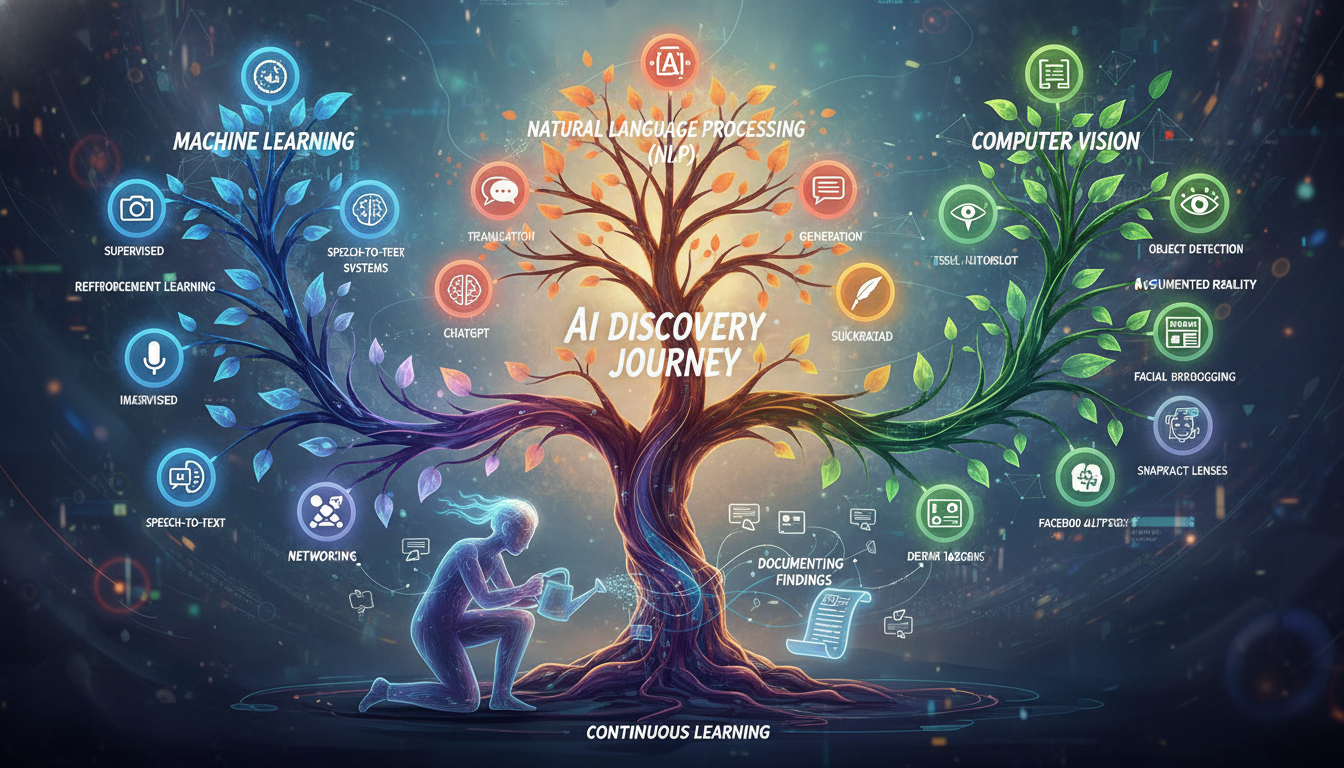
The satisfaction of discovering a truly impactful AI app before it becomes a household name is immense. It’s not just about being “first”; it’s about empowering yourself with tools that genuinely enhance your capabilities, streamline your work, and spark new possibilities. By adopting a proactive, analytical, and curious approach, you can navigate the exciting world of AI with confidence, continually unearthing the innovations that matter most.