


The world of Artificial Intelligence is evolving at an unprecedented pace. Every day brings a fresh wave of announcements, new tools, and innovative applications promising to revolutionize industries, streamline workflows, and enhance daily life. For the curious reader, keeping up can feel like an endless sprint, and discerning genuine breakthroughs from fleeting fads becomes a formidable challenge. How do you cut through the hype to identify AI discoveries that genuinely offer practical value?
This is precisely where a structured approach becomes invaluable. Rather than being swept away by the latest buzz, a practical framework allows you to systematically evaluate new AI tools and concepts, ensuring your focus remains on utility, reliability, and long-term benefit. This isn’t about becoming an AI expert overnight, but about equipping yourself with the right questions and perspectives to make informed decisions about what’s truly worth your attention and potential integration into your professional or personal toolkit.
Our goal here is to provide you with a clear, actionable framework – a set of lenses through which you can examine any new AI discovery. By the end of this guide, you’ll have a robust mental model to assess AI’s potential, identify its limitations, and confidently determine its relevance to your specific needs and interests.
Understanding the Core Value: Beyond the Shiny Newness
The first step in evaluating any AI discovery is to strip away the marketing jargon and advanced technical terms. At its heart, every truly valuable AI tool or concept solves a problem or fulfills a need. Your initial inquiry should always focus on this fundamental question: What problem does this AI solve, and how effectively does it do so?
Many AI solutions are built on impressive technology but address trivial issues, or problems that are already well-handled by existing, simpler methods. Others may offer solutions to significant problems but do so in an overly complex or inefficient manner. A practical evaluation begins by:
- Identifying the core problem: Is it a genuine pain point for you or your target use case?
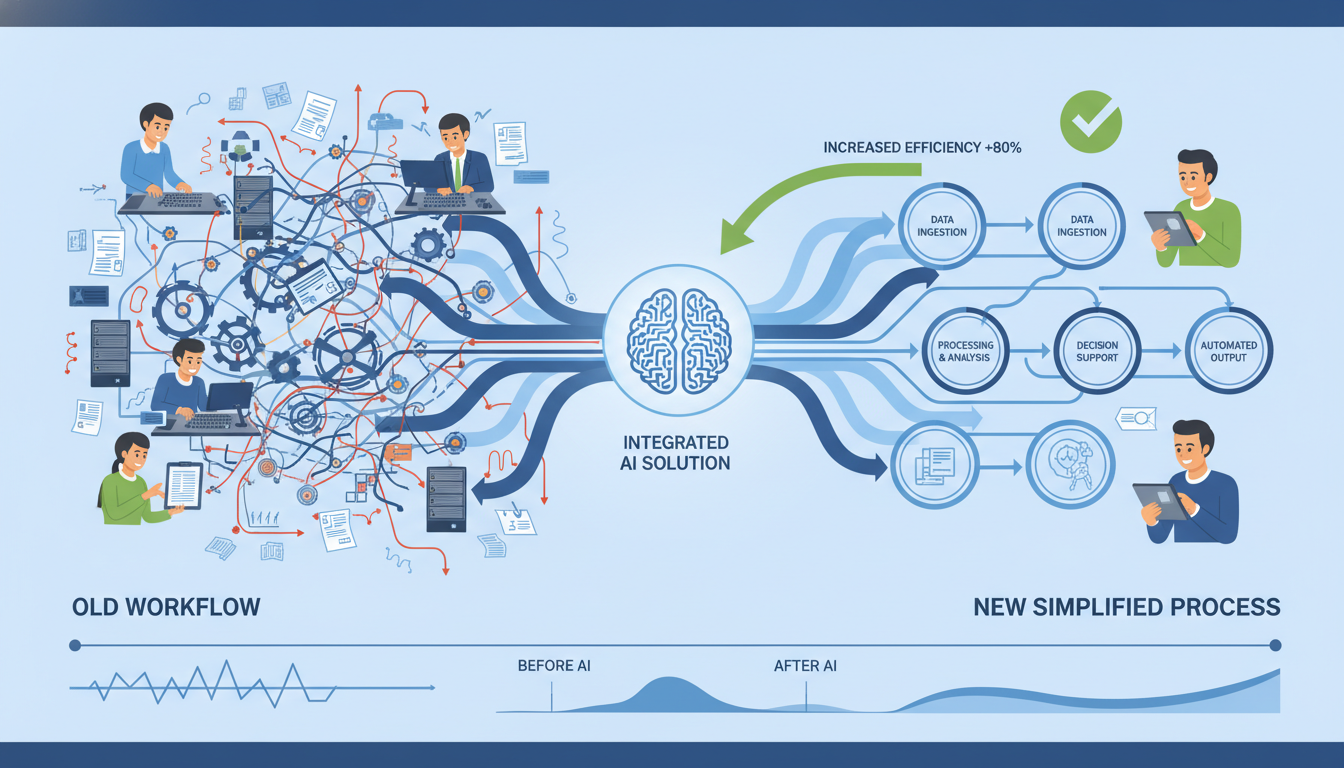
- Assessing the ‘before AI’ scenario: How is this problem currently being addressed? What are the limitations or inefficiencies of existing methods?
- Defining the ‘after AI’ scenario: How does this AI solution propose to improve upon the current situation? Does it offer a significant leap in efficiency, accuracy, or capability?
For instance, an AI tool that automates complex data analysis for scientific research offers substantial core value if it reduces analysis time from weeks to hours, allowing researchers to focus on interpretation rather than manual processing. Conversely, an AI that simply rephrases sentences without significant improvement in clarity or tone might offer less compelling core value compared to a human editor or simpler grammar check tools.
Practicality Check: Seamless Integration into Your Workflow
An AI discovery, no matter how powerful, is only as good as its usability and its ability to integrate into your existing environment. A solution that requires a complete overhaul of your current processes or demands an unrealistic learning curve will likely gather dust, regardless of its potential. This section focuses on the practicalities of adoption.
Ease of Use and Learning Curve
Consider how intuitive the AI’s interface is. Does it require extensive technical knowledge, or is it designed for a broader audience? A tool with a steep learning curve can negate its benefits by demanding too much time and resources for mastery. Look for clear documentation, tutorials, and a user-friendly design.
Compatibility and Integration
Will this AI tool play nicely with your existing software, platforms, or data sources? Many AI solutions are designed to integrate with popular ecosystems (e.g., cloud platforms, common CRMs, office suites). A lack of compatibility can create new silos and complicate data flow, undermining the very efficiency it promises to deliver.
Resource Requirements
Does the AI require significant computational power, specialized hardware, or large datasets that you may not possess? Some advanced AI models demand substantial resources to run effectively, which can be a barrier for individuals or smaller organizations. Be realistic about what you can provide.
Reliability and Robustness: Trusting the AI’s Output
Trust is paramount when dealing with AI. You need to be confident that the AI’s outputs are consistent, accurate, and dependable. An AI that occasionally produces brilliant results but frequently fails or generates errors is ultimately unreliable and can lead to more problems than it solves.
When evaluating reliability, consider:
- Accuracy and Consistency: Does the AI consistently deliver correct or appropriate results across a variety of inputs? How does it handle edge cases or ambiguous data?
- Error Handling: What happens when the AI encounters unexpected input or situations it hasn’t been trained for? Does it gracefully fail, provide useful error messages, or produce nonsensical output?
- Transparency and Explainability: Can you understand, to some extent, how the AI arrived at its conclusion or recommendation? While true explainability is a complex field, some level of insight into the AI’s reasoning can build trust and help you debug issues.
- Data Quality and Provenance: What data was the AI trained on? Is it high-quality, representative, and relevant to your use case? Biased or insufficient training data can lead to skewed or unreliable results.
For example, an AI medical diagnostic tool might show incredible accuracy in lab conditions, but if it struggles with real-world patient data that varies widely, its reliability in a clinical setting would be questionable. Always look for evidence of real-world testing and a clear understanding of its limitations.
Scalability and Future-Proofing: Growing with AI
An AI discovery might be perfectly suited for your current needs, but what about tomorrow? Technology evolves rapidly, and your requirements will likely change over time. A robust AI solution should offer a degree of scalability and adaptability.
Ability to Scale
If the AI proves successful, can it handle increased demand? Will it perform just as well if you feed it ten times, or a hundred times, more data or requests? This is particularly critical for business applications where growth is a goal. Look into its architecture and whether it’s designed for expansion.
Updates and Maintenance
Is the AI actively maintained and updated by its developers? A stagnant AI tool can quickly become obsolete as underlying technologies advance and new vulnerabilities are discovered. Regular updates indicate a commitment to improvement and security.
Adaptability and Customization
Can the AI be adapted or customized to fit evolving needs? Some AI models are rigid, while others offer APIs, plugins, or fine-tuning capabilities that allow users to tailor them for specific purposes. Flexibility can significantly extend the lifespan and utility of an AI solution.
Ethical Considerations and Bias: A Responsible Approach
AI is not neutral; it reflects the data it’s trained on and the intentions of its creators. Evaluating an AI discovery responsibly means examining its ethical implications and potential for bias. This is a critical step, especially for tools intended for sensitive applications or widespread public use.
Consider the following ethical checklist:
- Fairness and Bias: Has the AI been tested for biases related to gender, race, age, or other protected characteristics? Does it produce equitable outcomes across different user groups?
- Transparency: Is it clear how the AI makes decisions? Can its processes be audited or explained to affected individuals?
- Privacy: How does the AI handle personal or sensitive data? Is it compliant with relevant data protection regulations (e.g., GDPR, CCPA)? Is data anonymized or encrypted where appropriate?
- Accountability: Who is responsible if the AI makes a mistake or causes harm? Are there clear mechanisms for recourse?
- Societal Impact: What are the broader societal implications of this AI? Does it have the potential for misuse, job displacement without alternative solutions, or exacerbating existing inequalities?
For example, an AI used in hiring processes must be rigorously evaluated for bias to ensure it doesn’t unfairly discriminate against certain demographics, even unintentionally. Understanding these ethical dimensions is not just good practice; it’s essential for responsible AI adoption.
Cost-Benefit Analysis: Beyond the Price Tag
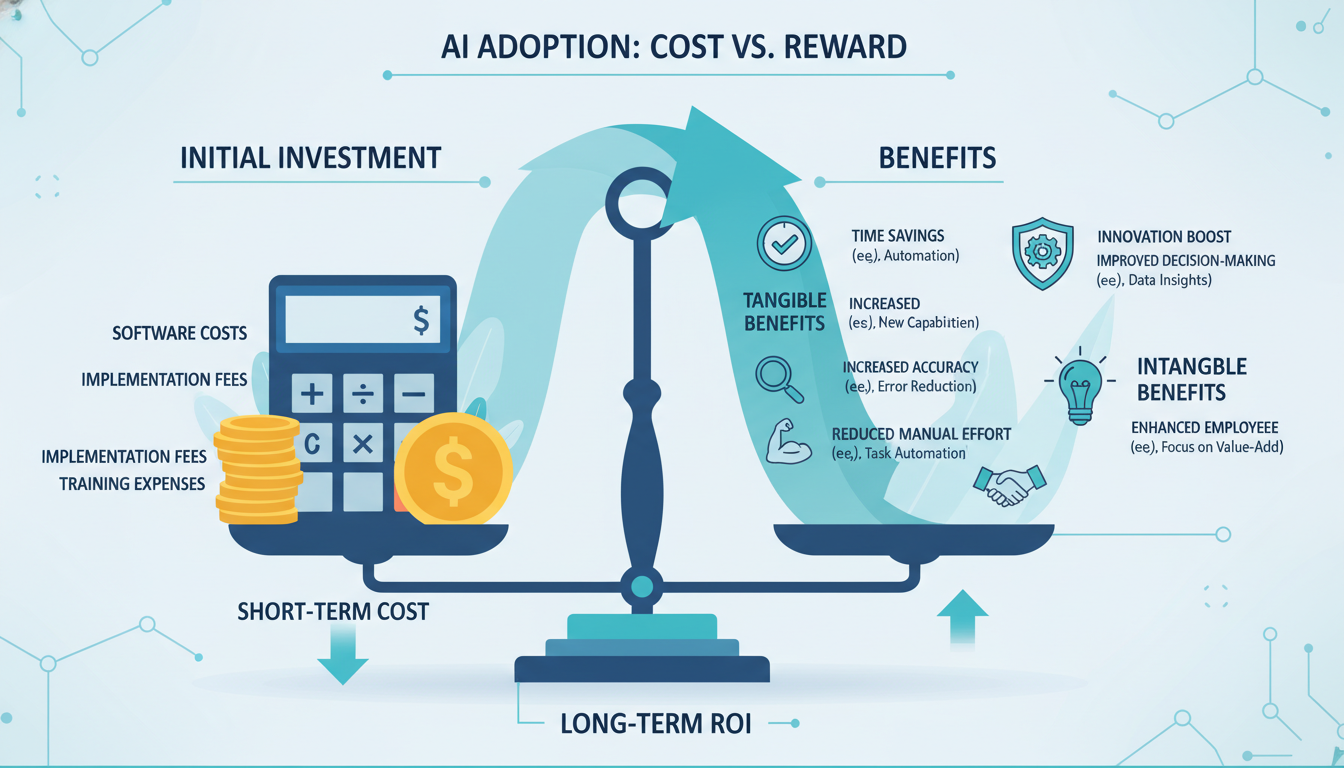
While some AI tools are free or open-source, many come with a cost – whether direct financial expenditure, subscription fees, or the indirect cost of integration and maintenance. A true evaluation requires a comprehensive cost-benefit analysis that looks beyond the immediate price.
Direct Costs
This includes licensing fees, subscription models, hardware upgrades, and potential training costs for users. Be sure to understand the full pricing structure, including any hidden fees for advanced features or increased usage.
Indirect Costs
Consider the time and effort required for implementation, integration with existing systems, ongoing maintenance, and potential troubleshooting. There’s also the opportunity cost – what else could you be doing with the resources allocated to this AI?
Quantifiable Benefits
How much time, money, or resources will the AI save? Can you measure improvements in efficiency, accuracy, or output quality? For instance, an AI that automates customer support might reduce response times by 50% and decrease staffing needs by 20%.
Qualitative Benefits
Beyond numbers, what are the less tangible benefits? These might include improved decision-making, enhanced creativity, better customer satisfaction, or the ability to tackle problems previously deemed intractable. While harder to measure, these benefits can be profoundly impactful.
Community and Support: Not Going It Alone
Even the most intuitive AI tools can present challenges. Having access to a supportive community and reliable technical assistance can make a significant difference in your long-term success with an AI discovery. Neglecting this aspect can lead to frustration and abandonment.
Evaluate the following support elements:
- Documentation: Is there clear, comprehensive, and up-to-date documentation available? This includes user manuals, API references, and troubleshooting guides.
- Community Forums: Does the AI have an active user community? Forums, Discord channels, or subreddits can be invaluable for peer support, sharing best practices, and finding solutions to common problems.
- Developer Support: For commercial AI products, what level of technical support is offered? Is it responsive, knowledgeable, and accessible through various channels (email, chat, phone)?
- Tutorials and Training: Are there official or community-created tutorials, courses, or training materials available to help users get started and master advanced features?
A thriving ecosystem around an AI tool is often a strong indicator of its longevity and the commitment of its developers. It also means you’re less likely to be stuck when you encounter an unexpected issue.
Hands-On Testing: The Proof is in the Doing
No amount of theoretical evaluation can replace direct experience. The final, and arguably most crucial, step in our framework is to engage in hands-on testing. This allows you to validate your assumptions and uncover practical insights that might not be evident from specifications or reviews.
Start Small
Begin with a pilot project or a limited trial. Don’t commit to full-scale adoption until you’ve seen the AI perform in a controlled environment relevant to your actual use case. Many AI tools offer free trials or freemium versions for this purpose.
Use Real-World Data
Whenever possible, test the AI with your own data or data that closely mimics your real-world scenarios. Synthetic or example data provided by the developer might not expose the same challenges you’ll face.
Iterate and Observe
Pay close attention to how the AI performs. Document successes, failures, and unexpected behaviors. What are its strengths? Where does it struggle? How does it impact your workflow? Gather feedback from others who test it, if applicable.

For instance, if you’re evaluating an AI writing assistant, try using it for a variety of tasks – drafting emails, generating blog post ideas, summarizing articles. Observe not just the output quality, but also how efficiently you can work with the tool, and whether it truly enhances your productivity or creates more work.
Conclusion: Your Compass in the AI Frontier
The landscape of AI discoveries will continue to expand, bringing with it both incredible opportunities and considerable noise. By adopting a structured, practical framework for evaluation, you transform from a passive observer into an active, discerning participant. This approach empowers you to look beyond the immediate hype and assess the true potential and practical implications of any new AI tool or concept.
Remember, the goal isn’t to adopt every new AI that emerges, but to intelligently identify those that genuinely align with your needs, offer tangible benefits, and integrate seamlessly into your life or work. By consistently asking the right questions about core value, practicality, reliability, scalability, ethics, cost, support, and through hands-on testing, you equip yourself with a robust compass to navigate the exciting, yet often overwhelming, frontier of artificial intelligence. Embrace curiosity, but temper it with critical, practical evaluation, and you’ll unlock the real power of AI discoveries.