
Introduction: The Dream of a Sustainable Content System
Every creator, marketer, and business owner dreams of a content machine that hums along smoothly, consistently delivering valuable material to their audience. But the reality often looks more like a frantic scramble, a never-ending treadmill of deadlines, and a system that feels more like a burden than a boon. You start with grand ambitions, only to find yourself overwhelmed, burnt out, and wondering where it all went wrong.
The good news? It doesn’t have to be this way. Building a content system that you can actually maintain is not about working harder; it’s about working smarter, with intention and a clear understanding of your capacity. This guide will walk you through the essential steps to design, implement, and refine a content system that supports your goals without sacrificing your sanity. We’ll cover everything from defining your strategy to choosing the right tools and establishing a workflow that sticks.
Why Most Content Systems Fail (and How to Avoid It)
Before we dive into building, let’s understand why so many content systems falter. Recognizing these common pitfalls is the first step toward creating a resilient system.
The Pitfalls of Overambition
One of the biggest culprits is overambition. We see what successful creators are doing and try to replicate their output without their resources, experience, or established processes. This often leads to:
- Unrealistic Content Calendars: Promising daily blog posts, weekly videos, and multiple social media updates when you can realistically manage only a fraction of that.
- Ignoring Resource Constraints: Not accounting for the time, budget, and skills required for each piece of content.
- Chasing Every Trend: Spreading yourself too thin by trying to create every type of content on every platform.
To avoid this, start small. Focus on consistency over quantity. It’s better to publish one high-quality, well-researched piece of content per week than five rushed, mediocre ones.
Lack of Clarity and Strategy
Another common failure point is a fuzzy understanding of why you’re creating content and who it’s for. Without a clear strategy, your content becomes a series of disconnected efforts, lacking direction and impact. This manifests as:
- Content for Content’s Sake: Creating content without a specific goal (e.g., lead generation, brand awareness, customer support).
- Generic Topics: Producing content that doesn’t resonate with your target audience because you haven’t clearly defined who they are and what their pain points are.
- Inconsistent Messaging: Your brand voice and core messages get lost in a sea of disparate content pieces.
A strong strategy acts as your compass, guiding every content decision and ensuring every piece serves a purpose.
The Foundational Pillars of a Sustainable Content System
A truly maintainable content system rests on four interconnected pillars. Neglect any one, and the whole structure becomes unstable.
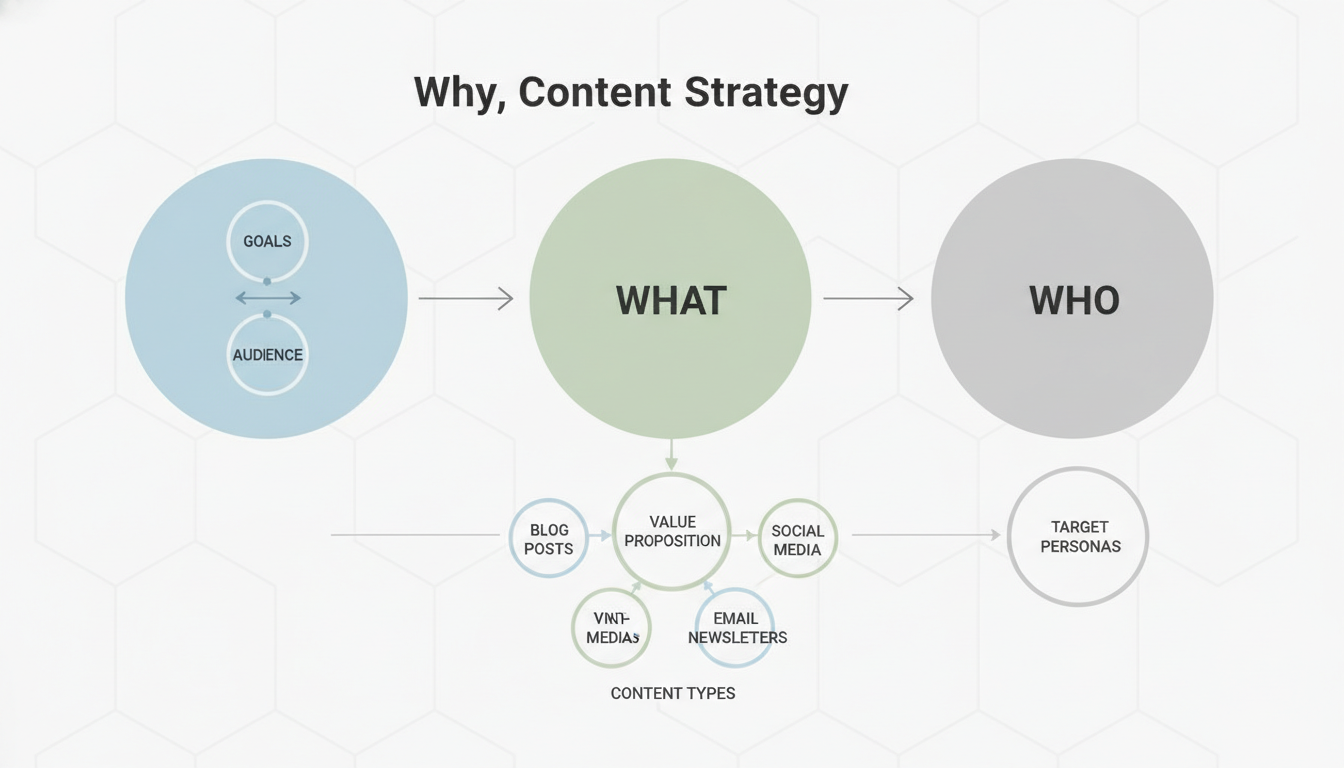
- Strategy: Your ‘why’ and ‘what’. This defines your audience, goals, unique value proposition, and the types of content you’ll create.
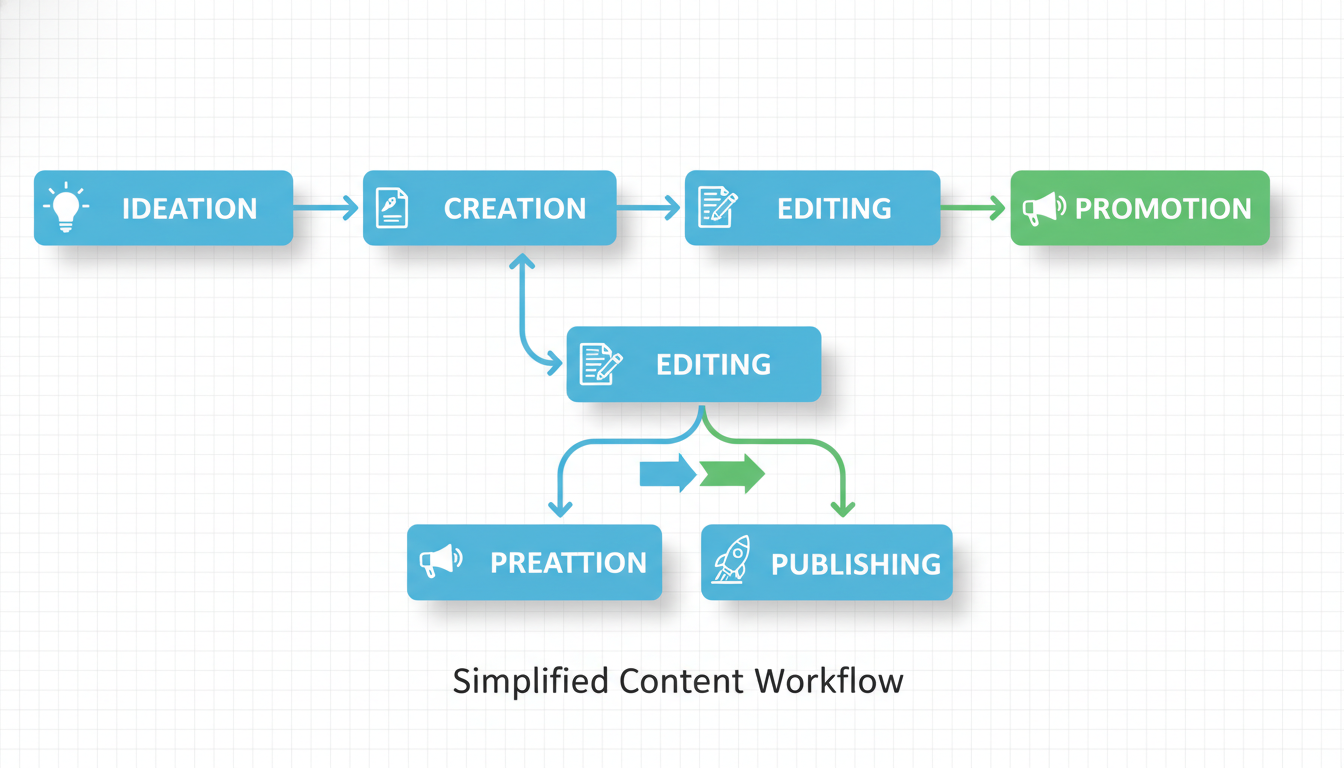
- Process: Your ‘how’. This is the step-by-step workflow for ideation, creation, editing, publishing, and promotion.
- Tools: Your ‘with what’. These are the software and platforms that facilitate your process, from project management to content creation and scheduling.
- Review & Iterate: Your ‘how well’ and ‘how to improve’. This involves regularly analyzing performance, gathering feedback, and refining your strategy and process.
By focusing on these four areas, you build a robust framework that can adapt and grow with you.
Step 1: Define Your Content Strategy (The “Why” and “What”)
This is the most critical step. Without a clear strategy, you’re building a house without blueprints. Take the time to answer these fundamental questions:
Understanding Your Audience
Who are you trying to reach? Go beyond demographics. What are their:
- Pain Points and Challenges? What problems do they need solved?
- Goals and Aspirations? What do they want to achieve?
- Questions and Information Needs? What are they searching for online?
- Preferred Content Formats? Do they prefer reading, watching, or listening?
- Where do they hang out online? Which platforms are most effective for reaching them?
Create detailed audience personas to keep your target reader/viewer/listener top of mind for every piece of content you create.
Setting Clear Goals
What do you want your content to achieve? Be specific and measurable. Common content goals include:
- Increasing website traffic
- Generating leads
- Building brand awareness
- Establishing thought leadership
- Supporting customer service
- Driving sales
Your goals will dictate the types of content you create and how you measure success.
Identifying Your Unique Value Proposition
What makes your content different? Why should someone choose to consume your content over countless others? This could be your unique perspective, a specific niche you serve, your tone of voice, or the depth of your research. Articulating this helps you stand out.
Choosing Content Types and Topics
Based on your audience and goals, decide on the primary content types you’ll focus on (e.g., blog posts, videos, podcasts, infographics, email newsletters). Then, brainstorm evergreen topics that align with your audience’s needs and your expertise. Focus on topics that remain relevant over time, providing lasting value.
Step 2: Design Your Content Workflow (The “How”)
Once your strategy is solid, it’s time to map out the journey of a piece of content from idea to publication and beyond. A well-defined workflow ensures efficiency, consistency, and quality.
The Content Lifecycle Checklist:
Consider these stages and define the steps within each for your specific needs:
- Ideation & Planning:
- Brainstorming sessions (individual or team)
- Keyword research and topic validation
- Content brief creation (title, outline, target audience, keywords, call to action)
- Scheduling on a content calendar
- Content Creation:
- Drafting the initial content (writing, recording, designing)
- Gathering necessary assets (images, data, external links)
- Ensuring content aligns with the brief and brand guidelines
- Editing & Review:
- Self-editing for clarity, grammar, and flow
- Peer review or professional editing (for accuracy, tone, and consistency)
- Fact-checking and proofreading
- Approval process (if multiple stakeholders are involved)
- Optimization & Formatting:
- SEO optimization (meta descriptions, alt text, internal linking)
- Formatting for readability (headings, bullet points, short paragraphs)
- Adding calls to action (CTAs)
- Preparing for platform-specific requirements (e.g., video thumbnails, podcast show notes)
- Publishing:
- Uploading content to your chosen platform (CMS, YouTube, podcast host)
- Scheduling publication date and time
- Final check before going live
- Promotion & Distribution:
- Sharing across social media channels
- Email newsletter inclusion
- Syndication or outreach to relevant communities
- Paid promotion (if applicable)
- Analysis & Iteration:
- Tracking key performance indicators (KPIs)
- Gathering feedback
- Identifying areas for improvement for future content
Document this workflow clearly. It doesn’t have to be overly complex, but every team member should understand their role and responsibilities at each stage.
Step 3: Choose the Right Tools (Without Overcomplicating It)
The right tools can streamline your content system; the wrong ones can create more friction. The key is to choose tools that genuinely support your workflow without adding unnecessary complexity or cost.
Project Management & Organization
You need a central place to manage your content calendar, tasks, and communication. Options range from simple spreadsheets to dedicated project management software:
- Trello/Asana/ClickUp: Excellent for visual workflows, task assignment, and tracking progress.
- Google Docs/Sheets: Simple, free, and effective for small teams or individual creators to manage content briefs and calendars.
- Notion: Highly flexible for creating databases, wikis, and project boards for content.
Choose one that fits your team’s size and comfort level. The best tool is the one you’ll actually use consistently.
Content Creation & Editing
For writing, design, and multimedia production:
- Google Docs/Microsoft Word: Standard for text-based content.
- Grammarly/ProWritingAid: Essential for proofreading and improving writing quality.
- Canva/Adobe Express: User-friendly tools for creating visuals, social media graphics, and simple infographics.
- Descript/Audacity/DaVinci Resolve: For audio and video editing, depending on your needs and skill level.
Scheduling & Publishing
These tools help you distribute your content efficiently:
- WordPress/Webflow/Squarespace: Your Content Management System (CMS) for blog posts and website content.
- Buffer/Hootsuite/Later: For scheduling social media posts across multiple platforms.
- Mailchimp/ConvertKit/MailerLite: For managing email newsletters and automation.
Resist the urge to adopt every shiny new tool. Start with the essentials, master them, and only add more if a clear need arises that your current stack can’t meet.
Step 4: Implement and Iterate (The “Do” and “Refine”)
A content system isn’t a static blueprint; it’s a living, breathing entity that needs to be implemented, tested, and continuously improved. This is where the rubber meets the road.
Start Small and Build Momentum
Don’t try to implement your entire grand system overnight. Pick one content type, define its workflow, and execute it consistently for a few weeks. As you gain confidence and iron out kinks, gradually expand to other content types or increase your output.
Prioritize Consistency Over Perfection
It’s easy to get bogged down in trying to make every piece of content absolutely perfect. While quality is important, consistent delivery of good content often outperforms sporadic delivery of perfect content. Set realistic quality standards and stick to your publishing schedule. You can always refine and improve over time.
Gather Feedback and Analyze Performance
Your content system should be data-driven. Regularly check your analytics:
- Which content pieces are performing best (traffic, engagement, conversions)?
- Which channels are most effective for distribution?
- Where are people dropping off?
Also, actively seek feedback from your audience and team members. What’s working? What’s confusing? What could be improved?
Refine and Adapt
Use the insights from your analysis and feedback to iterate on your system. This might mean:
- Adjusting your content calendar to better match your resources.
- Tweaking your workflow steps to remove bottlenecks.
- Experimenting with new content formats or distribution channels.
- Updating your audience personas as you learn more about them.
The goal is continuous improvement, making small, incremental changes that lead to significant gains over time.

Common Pitfalls and How to Overcome Them
Even with a well-designed system, challenges will arise. Here’s how to tackle some common hurdles:
Battling Burnout
Content creation is demanding. Burnout is a real threat. To prevent it:
- Schedule Breaks: Treat breaks, vacations, and downtime as non-negotiable parts of your schedule.
- Batch Tasks: Group similar tasks together (e.g., all research on Monday, all drafting on Tuesday). This reduces context switching and improves focus.
- Delegate or Outsource: If a task isn’t your strength or takes too much time, consider delegating it to a team member or hiring a freelancer.
- Say No: Don’t commit to content ideas or projects that don’t align with your strategy or capacity.
Overcoming Perfectionism
The desire for perfection can paralyze your content efforts. Remember the 80/20 rule: aim for 80% perfection and get it out there. The remaining 20% often takes 80% of the effort and yields diminishing returns. Focus on delivering value and trust that you can improve with each iteration.
Managing Scope Creep
It’s easy for a simple blog post idea to balloon into a massive research project. To keep scope in check:
- Stick to the Content Brief: Ensure every piece of content adheres to its initial brief.
- Define Clear Deliverables: Before starting, know exactly what the final output should look like.
- Time-Box Tasks: Allocate a specific amount of time for each stage of content creation and stick to it.
Conclusion: Your Journey to a Maintainable Content System
Building a content system you can actually maintain is an ongoing journey, not a destination. It requires strategic thinking, disciplined execution, and a willingness to adapt. By focusing on your ‘why’ (strategy), streamlining your ‘how’ (process), leveraging the right ‘with what’ (tools), and consistently asking ‘how well’ (review and iterate), you can transform your content efforts from a source of stress into a powerful engine for growth.
Start small, be consistent, and don’t be afraid to adjust your sails as you navigate the ever-evolving landscape of content creation. Your audience, and your future self, will thank you for it. Now, go forth and build a system that truly works for you!