

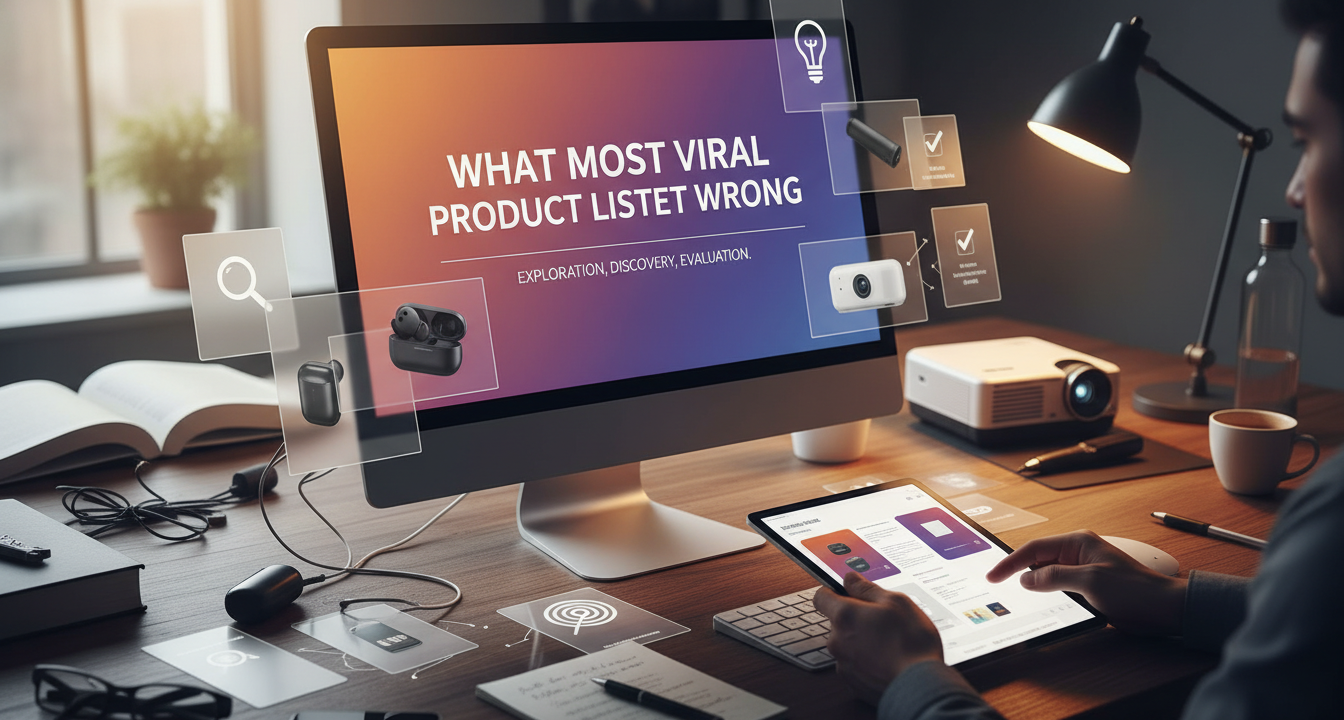
The Allure and Illusion of “Viral”
In an age saturated with digital content, the phrase “viral product” has become a siren song, luring us with promises of innovation, convenience, or simply the next must-have item. We scroll through endless lists, captivated by sleek designs, ingenious functionalities, and the sheer momentum of collective excitement. From social media feeds to curated online marketplaces, these lists proliferate, showcasing everything from kitchen gadgets that promise to revolutionize meal prep to tech accessories designed to streamline our digital lives. The initial appeal is undeniable: who wouldn’t want to be ahead of the curve, to discover that one thing that genuinely improves their day?
Yet, for many, the thrill of discovery often gives way to a quiet disappointment. That “viral” item, once unboxed, might sit unused, gather dust, or simply fail to live up to its hyped-up potential. The problem isn’t necessarily with the products themselves, but with the very premise of how they’re presented and perceived. Viral product lists, by their nature, prioritize novelty, immediate impact, and shareability over the more nuanced, yet far more important, metrics of genuine utility, longevity, and personal relevance. They often mistake fleeting popularity for enduring value, creating a cycle of excitement followed by buyer’s remorse.
This article aims to dissect what most viral product lists get wrong and, more importantly, to equip you with a framework for smarter, more intentional discovery. We’ll move beyond the superficial glow of virality to uncover what truly makes a product valuable, helping you cut through the noise and invest in items that genuinely enhance your life.
Beyond the Hype Cycle: What Makes a Product Truly Valuable?
To truly understand what’s missing from the typical viral product list, we must first define what makes a product genuinely valuable. It’s not about how many shares it gets or how quickly it sells out. True value is rooted in a product’s ability to solve a real problem, simplify a complex task, or enrich an experience in a meaningful, lasting way. This stands in stark contrast to the fleeting nature of trends, which often prioritize aesthetic appeal or a momentary “wow” factor over sustained utility.
Consider the difference between a product that goes viral because it’s quirky or visually appealing, and one that gains traction because it fundamentally improves a daily routine. The former might offer a brief amusement; the latter offers a tangible, ongoing benefit. A truly valuable product integrates seamlessly into your life, often becoming indispensable without you even realizing it. It’s the tool you reach for instinctively, the item that consistently delivers on its promise, or the solution that quietly eliminates a recurring frustration.
This shift in perspective – from novelty to utility, from hype to help – is crucial. It encourages us to look beyond the surface and ask deeper questions about a product’s purpose, its design, and its potential impact on our lives. It’s about seeking out solutions, not just sensations.
The Missing Context: Why “One Size Fits All” Fails
One of the most significant shortcomings of viral product lists is their inherent lack of context. They present products as universally desirable, often ignoring the vast spectrum of individual needs, lifestyles, and environments. What might be a game-changer for a minimalist living in a tiny apartment could be utterly impractical for a large family in a suburban home, and vice-versa. A product designed for a specific hobbyist might be hailed as revolutionary within that niche, but its viral spread to a general audience often leads to disappointment because the broader context is missing.
For example, a highly specialized kitchen appliance might go viral for its unique capability. While it might be invaluable to a professional chef or an avid home baker, its utility for someone who rarely cooks or prefers simpler methods is negligible. The viral list, however, often presents it as a universal upgrade, failing to qualify its specific applications or target audience. This oversight leads to a disconnect between expectation and reality.
Genuine product discovery, therefore, requires a personal filter. It’s not just about what a product *does*, but what it *does for you* in your specific circumstances. Understanding your own needs, challenges, and aspirations is the first step in discerning whether a widely acclaimed product holds any true value for your individual life. Without this personal context, even the most innovative product can become just another piece of clutter.
Identifying True Innovation vs. Clever Marketing
The line between genuine innovation and clever marketing can often be blurry, especially when products are presented through the lens of virality. True innovation often addresses a fundamental problem in a novel and effective way, or significantly improves upon existing solutions. It’s about creating something genuinely new or making something significantly better. Clever marketing, on the other hand, can make an incremental improvement or even a re-packaged existing idea seem revolutionary.
Viral lists frequently highlight products that excel in presentation and immediate visual appeal, sometimes overshadowing their actual functional merit. A product might look futuristic or have a catchy slogan, but does it offer a substantial leap forward in performance, efficiency, or user experience? Or is it simply a new coat of paint on an old idea?
A Checklist for Discerning Value
- Does it solve a genuine problem? Identify the core issue the product claims to address. Is this a problem you actually experience?
- Is the solution truly novel or significantly better? Compare it to existing alternatives. Does it offer a clear, demonstrable advantage?
- Is its design functional and intuitive? Beyond aesthetics, does it feel good to use and perform its intended function effortlessly?
- Does it promise longevity? Consider the materials, build quality, and potential for repair or sustained use over time.
- Is its value proposition clear and transparent? Be wary of vague claims or excessive jargon that obscure its true purpose.
- Does it align with your personal values and lifestyle? Will it genuinely integrate into your daily routines or simply add complexity?
Longevity Over Novelty: Products That Stand the Test of Time
While viral products often burn bright and fade fast, truly valuable items are those that offer sustained utility and stand the test of time. These are the products that become staples in our homes and lives, not because they’re constantly trending, but because they consistently deliver on their promise. They are often characterized by durable construction, thoughtful design, and a focus on core functionality rather than fleeting features.
Think about classic tools, timeless pieces of furniture, or essential everyday items that have remained largely unchanged for decades because their design and function are simply excellent. These products aren’t designed to be replaced every season; they’re built to last, to be repaired, and to evolve with your needs. Their value isn’t in their newness, but in their reliability and enduring performance.

Investing in longevity means making choices that reduce waste, save money in the long run, and foster a deeper appreciation for the items we own. It’s a mindset that prioritizes quality and durability over the fleeting excitement of the latest gadget. When you seek out products with longevity, you’re not just buying an item; you’re investing in a solution that will serve you faithfully for years to come, becoming a quiet, dependable part of your daily rhythm.
The “Why” Behind the “What”: Understanding Your Needs
Before you even begin to consider what products might be valuable, it’s essential to understand *why* you’re looking for something new in the first place. Most viral product lists present solutions without first prompting you to identify the problem. This leads to impulse purchases driven by perceived desirability rather than genuine need. A more effective approach starts with introspection.
What aspects of your daily life could be improved? Are you struggling with organization, seeking to streamline a particular task, or looking for ways to enhance a hobby? By clearly defining the problem or the desired outcome, you create a filter through which to evaluate potential solutions. This proactive approach transforms product discovery from a passive consumption of trends into an active search for meaningful improvements.
Questions to Ask Before You Buy
- What specific problem am I trying to solve with this product?
- How will this product genuinely improve my daily routine or quality of life?
- Do I already own something that could fulfill a similar purpose?
- What are the long-term implications of owning this product (maintenance, storage, environmental impact)?
- Is this a need or simply a want driven by external influence?
- Have I researched alternatives and considered different approaches to solving this problem?
- Can I clearly articulate the core benefit this product offers *to me*?
By asking these questions, you move beyond the superficial appeal of a viral item and engage in a more thoughtful, needs-based evaluation. This process not only helps you avoid unnecessary purchases but also ensures that the products you do bring into your life are truly aligned with your goals and values.
Cultivating a Mindset of Practical Discovery
Moving away from the pitfalls of viral product lists requires cultivating a new mindset – one focused on practical, informed discovery. This isn’t about rejecting innovation or new products altogether, but about approaching them with a discerning eye and a clear understanding of your own priorities. It’s about becoming an active participant in your consumption choices, rather than a passive recipient of trends.
Practical discovery involves a blend of curiosity and critical thinking. It means being open to new ideas and solutions, but also rigorously evaluating their claims against your personal needs and real-world evidence. Instead of relying solely on curated lists, seek out diverse sources of information. Look for in-depth reviews that focus on long-term use and potential drawbacks, rather than just initial impressions. Engage with communities of users who share similar interests or challenges, as their collective experience can offer invaluable insights.

Furthermore, consider the source of information. Is it designed to inform or to persuade? Understanding the motivations behind product presentations can help you filter out hype and focus on objective facts. This mindset empowers you to make choices that are genuinely beneficial, leading to a more satisfying and less cluttered life.
From Fleeting Trends to Enduring Utility: Your Action Plan
Navigating the landscape of modern products can feel overwhelming, but by adopting a more intentional approach, you can transform your discovery process from a reactive chase after trends into a proactive search for lasting value. It’s about building a personal filter that prioritizes utility, longevity, and genuine problem-solving over fleeting popularity.
The goal isn’t to avoid all new products, but to become a more discerning consumer. To move beyond the superficiality of viral lists and embrace a strategy that leads to truly meaningful acquisitions. This shift not only benefits your wallet and your living space but also fosters a deeper appreciation for the items you choose to bring into your life.
Practical Steps for Smarter Product Discovery
- Define Your Needs First: Before looking at products, clearly identify the problems you want to solve or the improvements you seek.
- Research Beyond the Hype: Look for detailed, unbiased information. Seek out long-term user experiences and critical analyses, not just initial impressions.
- Prioritize Longevity and Quality: Choose products designed for durability and sustained performance over those built for short-term trends.
- Consider the Ecosystem: How does a new product fit into your existing tools, routines, and lifestyle? Does it simplify or complicate?
- Practice Patience: Resist the urge for immediate gratification. Allow time for trends to settle and for genuine value to emerge.
- Embrace Minimalism (in mindset): Focus on acquiring fewer, higher-quality items that serve multiple purposes or offer significant, lasting benefits.
Conclusion: The Art of Intentional Consumption
The world of products is constantly evolving, and with it, the ways we discover and acquire them. While viral product lists offer a glimpse into what’s currently capturing collective attention, they often fall short in guiding us toward what’s truly valuable. By understanding their limitations and adopting a more critical, context-aware approach, we can move beyond the cycle of hype and disappointment.
The art of intentional consumption lies in recognizing that true value isn’t dictated by popularity, but by a product’s ability to genuinely serve our individual needs, enhance our lives, and stand the test of time. It’s about making thoughtful choices that lead to lasting satisfaction, rather than chasing the next fleeting trend. By doing so, we not only make smarter purchases but also cultivate a more meaningful and less cluttered existence.