

How Small Habits Create a Better Everyday Routine
In a world constantly pushing for grand gestures and monumental achievements, it’s easy to overlook the quiet power of small, consistent actions. We often set ambitious goals, only to feel overwhelmed and give up when the path seems too steep. But what if the secret to a better everyday routine, to achieving lasting change, wasn’t about massive overhauls, but rather about embracing the seemingly insignificant? This guide will explore how micro-habits, those tiny, almost imperceptible shifts in behavior, can accumulate to create profound transformations in your life. We’ll delve into the science, practical methods, and actionable strategies to help you build a routine that supports your well-being and aspirations, one small step at a time.
Understanding the Power of Micro-Habits
The concept of micro-habits is simple yet revolutionary: make a new habit so small that it’s impossible to say no to. Instead of aiming for a daunting goal like “exercise for an hour every day,” you might start with “do one push-up.” This isn’t about the immediate physical benefit of that single push-up; it’s about building the identity of someone who exercises. It’s about showing up, consistently, no matter how small the action.
Why are micro-habits so effective? They bypass the internal resistance that often sabotages our best intentions. When a task feels too big, our brain’s natural inclination is to avoid it. But a task that takes mere seconds or requires minimal effort doesn’t trigger that same resistance. It lowers the barrier to entry, making it easier to start and, crucially, to maintain. Over time, these tiny actions create a ripple effect, building momentum and confidence that can then be leveraged to expand the habit.
Think of it like compound interest for your personal growth. A small deposit made consistently over time yields far greater returns than sporadic, large deposits. Similarly, a small habit performed daily will lead to more significant and sustainable change than an ambitious goal attempted inconsistently.
The Science Behind Habit Formation
Our brains are wired for efficiency, constantly seeking ways to automate behaviors to conserve mental energy. This is where habits come in. A habit is essentially a neurological loop consisting of three key components: a cue, a routine, and a reward. Understanding this loop is fundamental to intentionally building new habits and breaking old ones.
- Cue: This is the trigger that tells your brain to go into automatic mode and which habit to use. It could be a time of day, a location, a preceding action, an emotion, or other people. For example, seeing your running shoes by the door (cue) might trigger the urge to go for a run.
- Routine: This is the behavior itself, the habit you perform. It could be physical, mental, or emotional. Following the running shoes example, the routine would be putting on your shoes and going for a run.
- Reward: This is the positive outcome that helps your brain decide if this particular loop is worth remembering for the future. The reward could be the endorphin rush from exercise, the feeling of accomplishment, or simply the relief of checking something off your list.
When you consistently repeat this loop, the neural pathways in your brain strengthen, making the habit more automatic and less reliant on conscious willpower. The goal with micro-habits is to create a strong, positive feedback loop with minimal effort, making the reward accessible and reinforcing the desired behavior. Dopamine, a neurotransmitter associated with pleasure and motivation, plays a crucial role here. Anticipating the reward releases dopamine, driving us to perform the routine. By making the routine easy, we ensure we get to the reward, reinforcing the loop.
Identifying Your Keystone Habits
While all habits contribute to your routine, some are more powerful than others. These are known as “keystone habits.” A keystone habit is a single practice that, when adopted, tends to create a cascade of other positive changes in your life. It’s like the keystone in an arch – remove it, and the whole structure crumbles; put it in place, and everything else holds together.
Common keystone habits include:
- Regular Exercise: Often leads to better sleep, improved diet, increased energy, and reduced stress.
- Mindful Eating/Meal Prep: Can lead to healthier food choices, better digestion, and more energy, impacting mood and productivity.
- Daily Meditation/Mindfulness: Improves focus, reduces anxiety, enhances emotional regulation, and fosters greater self-awareness.
- Journaling: Helps process thoughts, clarify goals, track progress, and develop self-reflection.
- Consistent Sleep Schedule: Boosts cognitive function, mood, immune system, and overall physical health.
To identify your keystone habits, reflect on areas of your life where you want to see improvement. Then, consider what single habit, if consistently practiced, would naturally lead to positive shifts in those areas. For instance, if you want to be more productive, perhaps a consistent morning routine (which might include exercise or meditation) could be your keystone. Starting with one or two keystone habits can provide a strong foundation upon which to build a better everyday routine.
The “Tiny Habits” Method: Start Ridiculously Small
Dr. B.J. Fogg, a research associate at Stanford University and author of “Tiny Habits,” champions the idea of starting incredibly small. His method focuses on making habits so tiny that they are almost impossible to fail. The core principle is to prioritize consistency over intensity, especially in the initial stages.
Here’s how to apply the Tiny Habits method:
- Identify your aspiration: What do you want to achieve? (e.g., “I want to be healthier,” “I want to be more organized.”)
- Brainstorm tiny behaviors: Break down your aspiration into the smallest possible actions. If you want to be healthier, instead of “go to the gym for an hour,” think “do one push-up,” or “drink one glass of water.”
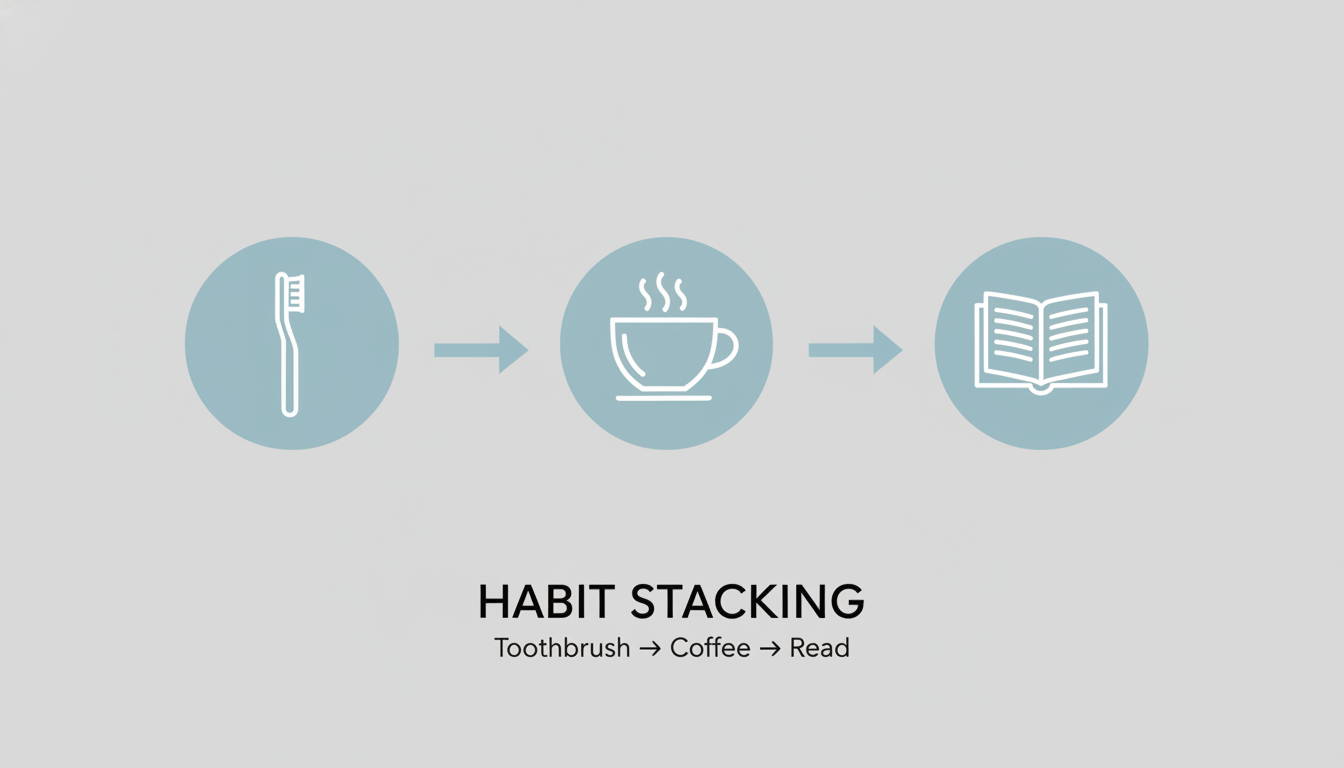
- Find an anchor: Connect your new tiny habit to an existing, reliable habit. This is called “habit stacking.” For example, “After I brush my teeth (anchor), I will do one push-up (new tiny habit).”
- Practice and celebrate: Perform the tiny habit immediately after your anchor. Crucially, celebrate immediately after completing the tiny habit. This celebration (a mental “Yay!” or a small physical gesture) creates a positive emotional reward, reinforcing the habit loop.
- Iterate and grow: Once the tiny habit is consistent, you can gradually increase its intensity or duration, but only if it feels easy and natural. The goal is to make it automatic first.
Examples of tiny habits:
- After I pour my morning coffee, I will read one sentence from a book.
- After I sit down at my desk, I will take one deep breath.
- After I use the restroom, I will do two squats.
- After I get into bed, I will think of one thing I’m grateful for.
The key is to make it so small that you can’t possibly fail, building momentum and belief in your ability to change.
Stacking Habits for Seamless Integration
Habit stacking is a powerful technique that leverages existing routines to introduce new behaviors. Instead of relying on willpower to remember a new habit, you simply attach it to something you already do automatically. This creates a natural cue for your new behavior, making it much easier to integrate into your day.
The formula for habit stacking is simple: “After [CURRENT HABIT], I will [NEW HABIT].”
Let’s look at some practical examples:
- Morning Routine:
- After I turn off my alarm, I will stretch for 60 seconds.
- After I finish my first cup of coffee, I will write down three things I need to accomplish today.
- After I get dressed, I will take my vitamins.
- Workday Routine:
- After I open my email client, I will review my top priority task for 5 minutes.
- After I finish a meeting, I will stand up and walk to the water cooler.
- After I close my laptop for lunch, I will spend 5 minutes tidying my immediate workspace.
- Evening Routine:
- After I finish dinner, I will load one item into the dishwasher.
- After I brush my teeth, I will read one page of a book.
- After I get into bed, I will take three deep, calming breaths.
The effectiveness of habit stacking comes from the fact that the cue for your new habit is already built into your day. You don’t have to remember to do it; your existing habit serves as the reminder. This reduces decision fatigue and makes the new behavior feel like a natural extension of your current routine. Start with one or two new habits and stack them onto very consistent existing habits.
Overcoming Obstacles and Staying Consistent
Even with the best intentions and the tiniest habits, consistency can be a challenge. Life happens, motivation wanes, and old patterns can resurface. Recognizing common obstacles and having strategies to overcome them is crucial for long-term success.
Common Obstacles:
- Forgetting: It’s easy to simply forget to perform a new, small habit, especially when it’s not yet automatic.
- Lack of Motivation: Some days, even a tiny habit can feel like too much effort.
- Perfectionism: Missing a day can lead to an “all or nothing” mindset, causing you to abandon the habit entirely.
- Environmental Triggers: Your environment might be working against your new habit (e.g., unhealthy snacks easily accessible).
Strategies for Consistency:
- Set Reminders (Initially): While habit stacking is ideal, a sticky note, a phone alarm, or a calendar reminder can be helpful in the very early stages until the habit loop begins to form.
- Plan for Failure (The “Never Miss Twice” Rule): Accept that you will miss a day sometimes. The key is to never miss two days in a row. If you miss, forgive yourself, and get right back on track the next day. This prevents a single slip-up from derailing your entire progress.
- Design Your Environment: Make your desired habit easier to do and undesired habits harder. If you want to read more, keep a book on your nightstand. If you want to drink more water, keep a full water bottle on your desk. If you want to eat healthier, remove tempting junk food from your pantry.
- Find Your “Why”: Reconnect with the deeper reason you want to build this habit. What long-term benefit will it bring? This intrinsic motivation can be a powerful force when willpower is low.
- Be Patient and Kind to Yourself: Habit formation takes time. There will be ups and downs. Treat yourself with compassion, acknowledge your efforts, and focus on progress, not perfection.


Tracking Progress and Celebrating Small Wins
One of the most powerful motivators for maintaining habits is seeing tangible progress. Tracking your habits, even the tiny ones, provides visual evidence of your consistency and reinforces the positive feedback loop. It transforms an abstract goal into a concrete achievement.
Methods for Tracking:
- Habit Trackers: Simple paper calendars where you mark an “X” for each day you complete a habit. Seeing a chain of “X”s can be incredibly motivating.
- Digital Apps: Apps like Streaks, Habitica, or Productive offer digital tracking, reminders, and sometimes gamification to keep you engaged.
- Journaling: A simple bullet journal can be used to log your habits daily, along with any reflections or observations.
Beyond tracking, actively celebrating your small wins is crucial. When you complete a tiny habit, take a moment to acknowledge your effort. This doesn’t have to be a grand party; it can be a mental “Good job!” a fist pump, a smile, or a quick note in your journal. This immediate positive reinforcement releases dopamine, strengthening the neural pathways associated with the new habit and making you more likely to repeat it.
Remember, the celebration isn’t about the size of the task; it’s about the act of showing up and being consistent. Each small win builds confidence and reinforces your identity as someone who follows through on their commitments.
Expanding Your Routine: From Micro to Macro
Once a micro-habit feels automatic and effortless, you can begin to gradually expand it. The beauty of starting small is that it creates a foundation of consistency and confidence. You’re not forcing yourself to do more; you’re naturally evolving the habit because it no longer feels like a struggle.
Here’s how to expand your micro-habits:
- Gradual Increase: If your habit was “do one push-up,” once that’s automatic, you might increase it to “do two push-ups,” then “do five push-ups,” and so on. Similarly, if it was “read one sentence,” you might move to “read one paragraph,” then “read one page.”
- Add Related Habits: Once a core micro-habit is established, you can stack related habits onto it. For example, after your “one push-up,” you might add “do one sit-up.”
- Listen to Your Body and Mind: Only increase the habit when it still feels easy and sustainable. If you start to feel resistance, scale back. The goal is to maintain consistency, not to push yourself to burnout.
- Maintain the Anchor: Even as the habit grows, keep it anchored to your existing routine. The cue remains the same, making the expanded habit feel natural.
This iterative process allows you to build a robust and meaningful routine without ever feeling overwhelmed. Each expansion is a natural progression, built on the solid ground of previous consistency.

Making It Stick: Long-Term Strategies
Building a better everyday routine isn’t just about starting habits; it’s about making them last. For long-term adherence, it’s helpful to shift your focus from outcome-based goals to identity-based habits.
- Identity-Based Habits: Instead of saying “I want to run a marathon” (outcome), think “I am a runner” (identity). When you adopt an identity, your actions naturally align with that identity. If you see yourself as a healthy person, making healthy choices becomes easier because it’s consistent with who you believe you are.
- Find Your Community: Surrounding yourself with people who share similar goals and habits can provide support, accountability, and inspiration. Whether it’s an online forum, a local club, or a group of friends, a supportive community can significantly boost your long-term success.
- Regular Review and Adjustment: Your life and goals will change over time, and so should your routine. Periodically review your habits. Are they still serving you? Do they need to be tweaked, expanded, or even retired? Be flexible and willing to adapt.
- Embrace the Process: Understand that building a better routine is a continuous journey, not a destination. There will be good days and challenging days. The key is to remain committed to the process, to keep showing up, and to trust that small, consistent efforts will lead to the life you envision.
By focusing on who you want to become and creating an environment that supports that identity, you can ensure your small habits not only create a better everyday routine but also contribute to a more fulfilling and intentional life.
Conclusion
The journey to a better everyday routine doesn’t require monumental leaps; it thrives on consistent, tiny steps. By understanding the science of habit formation, identifying keystone habits, and implementing methods like the “Tiny Habits” approach and habit stacking, you can systematically build a routine that serves your highest aspirations. Remember to start ridiculously small, celebrate every win, and be patient with yourself. The cumulative power of these micro-habits will, over time, transform your days, leading to a life of greater purpose, productivity, and peace. Begin today, not with a grand resolution, but with one tiny, achievable action, and watch as your better everyday routine unfolds.