

We’ve all been there: staring at a colossal task, a project so vast it feels like an insurmountable mountain. Whether it’s launching a new business, writing a book, overhauling your home, or mastering a complex skill, the sheer scale can trigger analysis paralysis, procrastination, and a deep sense of overwhelm. The dream feels distant, the starting line invisible.
But what if that mountain isn’t a single, monolithic entity? What if it’s merely a collection of small, manageable hills, each with a clear path to its summit? The secret to tackling any big task isn’t about finding more willpower or working harder; it’s about transforming the daunting into the doable. It’s about breaking down the colossal into a series of small, repeatable steps that, when consistently executed, lead inevitably to completion.
This guide will walk you through a proven framework to deconstruct any large undertaking. We’ll explore how to define your task with precision, brainstorm every conceivable sub-component, sequence them logically, and most importantly, distill them into micro-steps you can execute repeatedly without burnout. By the end, you’ll have a clear roadmap to conquer your biggest goals, one small, confident step at a time.
The Overwhelm Trap: Why Big Tasks Feel Impossible
Our brains are wired to seek efficiency and avoid perceived threats. A ‘big task’ often registers as a significant threat to our time, energy, and even self-esteem. This perception triggers a cascade of negative responses:
- Analysis Paralysis: With so many potential starting points and variables, we get stuck trying to figure out the ‘perfect’ first move, often resulting in no move at all.
- Procrastination: The sheer mental load of contemplating a huge project can be exhausting. Our brains seek immediate gratification or easier tasks, pushing the big one further down the priority list.
- Fear of Failure: The higher the stakes (and big tasks often feel high-stakes), the greater the fear of not meeting expectations, leading to avoidance.
- Lack of Clarity: Without a clear path, the task remains a nebulous blob, making it impossible to even conceptualize how to begin.
Consider the task of ‘writing a book.’ It’s not a single action; it’s thousands of actions. If you focus solely on ‘write a book,’ you’ll likely feel stuck. But if you focus on ‘write 500 words today,’ it becomes a concrete, achievable action. The difference is profound.
The Deconstruction Principle: Unlocking Progress
The core philosophy behind tackling big tasks is simple: every grand achievement is merely the sum of countless smaller, often mundane, actions. Think of a master chef preparing a gourmet meal. They don’t just ‘cook dinner.’ They chop vegetables, sauté aromatics, sear proteins, reduce sauces, plate with precision – each a distinct, repeatable step contributing to the final masterpiece.
The deconstruction principle involves systematically dissecting your big task into its constituent parts, then further breaking those parts into the smallest possible actionable units. This approach offers several powerful benefits:
- Reduces Overwhelm: By focusing on one small step at a time, the task no longer feels daunting.
- Builds Momentum: Completing small steps provides a sense of accomplishment, fueling motivation for the next.
- Increases Clarity: Each micro-step has a clear objective, making it easier to know exactly what to do next.
- Improves Accuracy: Focusing on smaller details allows for higher quality work at each stage.
- Facilitates Learning: You can learn and adapt more quickly when dealing with smaller, isolated components.
This isn’t just about making a to-do list; it’s about creating a strategic blueprint for success.
Step 1: Clearly Define Your “Big Task”
Before you can break something down, you need to know exactly what ‘it’ is. Vague goals lead to vague actions. Your big task needs a clear, concise definition that leaves no room for ambiguity.
Think of the SMART goal framework: Specific, Measurable, Achievable, Relevant, and Time-bound.
- Specific: What exactly needs to be done? Who is involved? What are the parameters?
- Measurable: How will you know when it’s complete? What are the quantifiable outcomes?
- Achievable: Is it realistic given your resources and constraints?
- Relevant: Does it align with your larger objectives and values?
- Time-bound: When will it be completed? What’s the deadline?
Example:
- Vague Task: “Get fit.”
- Defined Task: “Complete a 10k race in under 60 minutes by October 31st, requiring 4 training sessions per week.”
The more precise you are at this stage, the easier the subsequent steps will be. Write it down. Make it visible. This is your North Star.
Step 2: Brainstorm All Sub-Tasks Without Judgment
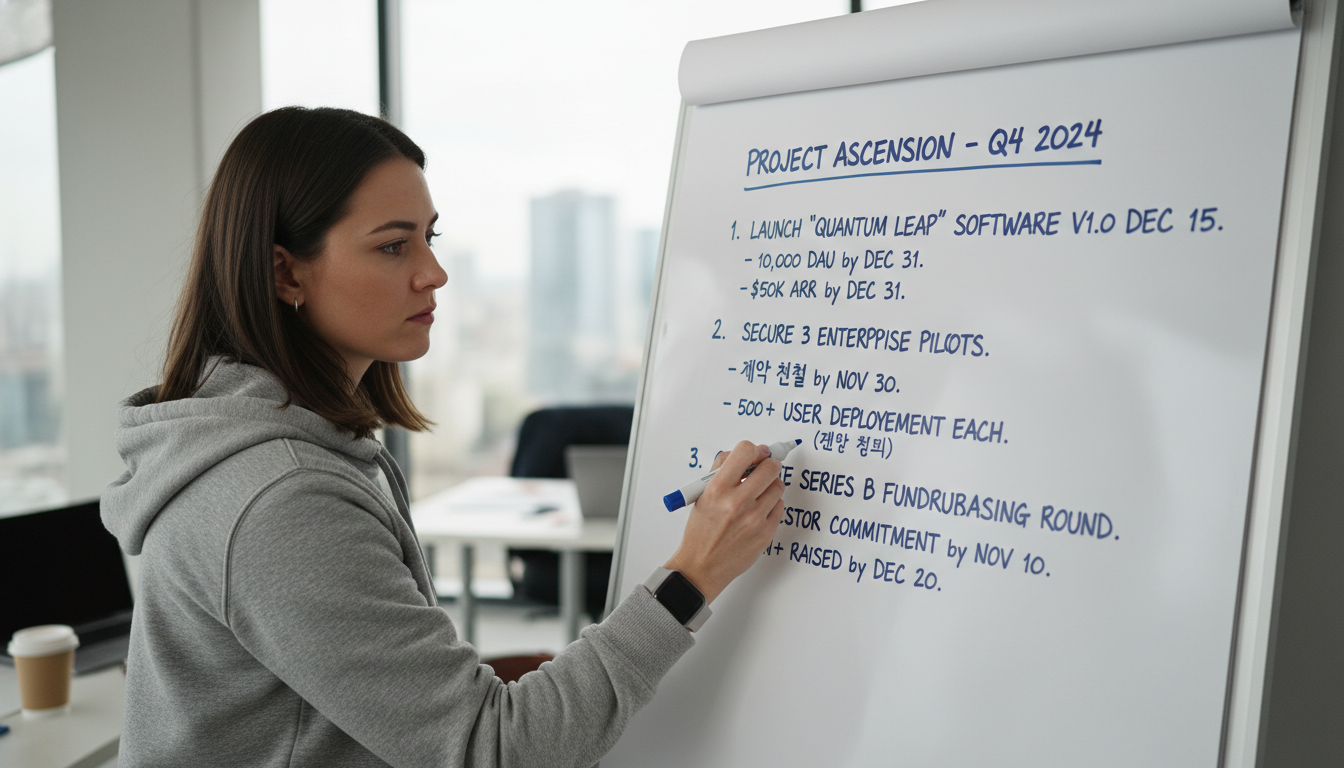
Once your big task is clearly defined, the next step is to extract every single component that contributes to its completion. This is a brainstorming phase, so don’t filter or judge. The goal is quantity, not quality, at this point.
Imagine you’re building a house. You wouldn’t just think ‘build house.’ You’d list: design blueprints, secure permits, lay foundation, frame walls, install plumbing, electrical, roofing, drywall, paint, flooring, landscaping, etc.
Techniques for Brainstorming Sub-Tasks:
- Mind Mapping: Start with your big task in the center, then branch out with major categories, and further branch out with specific sub-tasks.
- Bullet Journaling/List Making: Simply write down everything that comes to mind in a continuous stream.
- Digital Tools: Use project management software (like Trello, Asana, Monday.com) or even a simple document editor to list items.
- Reverse Engineering: Imagine the task is complete. What was the very last thing you did? What came before that? Work backward.
Let’s use the example of “Launch a new online course on digital marketing for beginners by Q3.”
Initial Brainstormed Sub-Tasks:
- Course outline creation
- Content writing (modules, lessons)
- Video recording
- Editing videos
- Creating quizzes/assignments
- Designing course platform
- Setting up payment gateway
- Marketing materials (landing page, emails, social media)
- Beta testing
- Launch day activities
- Legal review of content
- Pricing strategy
- Student support plan
- Graphics and branding
- Website integration
Don’t worry about order or detail yet. Just get everything out of your head and onto paper (or screen).
Step 3: Sequence and Prioritize Your Sub-Tasks
Now that you have a comprehensive list of sub-tasks, it’s time to bring order to the chaos. This involves two key actions: sequencing and prioritization.
Identifying Dependencies
Many tasks are dependent on others. You can’t install the roof before the walls are framed. You can’t edit videos until they’ve been recorded. Identify these relationships:
- What absolutely *must* happen before something else can begin?
- Are there tasks that can be done concurrently?
Using our online course example, ‘Course outline creation’ must happen before ‘Content writing,’ and ‘Video recording’ must happen before ‘Editing videos.’ ‘Designing course platform’ and ‘Creating graphics’ might be able to happen in parallel.
Prioritization Strategies
Once dependencies are clear, prioritize tasks based on their impact and urgency. Not all sub-tasks are created equal. Some are critical path items, while others are nice-to-haves.
- Critical Path: Identify the sequence of tasks that, if delayed, will delay the entire project. Focus on these first.
- Eisenhower Matrix: Categorize tasks into:
- Urgent & Important (Do first)
- Important, Not Urgent (Schedule)
- Urgent, Not Important (Delegate, if possible)
- Not Urgent, Not Important (Eliminate)
- MoSCoW Method: Must have, Should have, Could have, Won’t have (for this iteration).
By sequencing and prioritizing, you create a logical flow, ensuring you’re always working on the most impactful next step.
Step 4: Break Sub-Tasks into Micro-Steps (The Repeatable Core)
This is the most crucial step for turning a big task into small, repeatable actions. Each sub-task from Step 3 needs to be broken down further until it becomes a single, actionable, often repeatable item that can typically be completed in a short, focused burst (e.g., 15-60 minutes).
The goal is to reach a point where the action is so small and clear that you can’t *not* do it. It removes all friction and decision-making.
Let’s take the sub-task: “Content writing (modules, lessons)” from our online course example.
Micro-Steps for “Content writing (modules, lessons)”:
- Research Module 1, Lesson 1.1 topic (30 min)
- Outline Lesson 1.1 key points (20 min)
- Write first draft of Lesson 1.1 (60 min)
- Review and edit Lesson 1.1 for clarity and grammar (45 min)
- Create 3-5 bullet points for Lesson 1.1 summary (15 min)
- Find 1 relevant external resource for Lesson 1.1 (15 min)
- Repeat for Lesson 1.2, 1.3, etc.
- Repeat for Module 2, 3, etc.
Notice how each micro-step is specific, has a clear outcome, and a rough time estimate. These are the ‘bites’ you’ll be taking. They are small enough to not feel overwhelming, and often repeatable in their structure, allowing you to build a rhythm.
This is where the magic happens. Instead of thinking ‘write course content,’ you think ‘research topic for Lesson 1.1.’ This is a task you can start and finish in one sitting, providing immediate gratification and momentum.

Step 5: Assign Timelines and Resources
With your micro-steps defined, it’s time to make them concrete by assigning realistic timelines and identifying necessary resources.
Checklist for Timelines and Resources:
- Estimate Time for Each Micro-Step: Be realistic, not optimistic. Add buffer time. If a task usually takes 30 minutes, block out 45.
- Set Deadlines for Sub-Tasks: Group related micro-steps and assign a completion date for the larger sub-task.
- Identify Required Resources:
- Tools/Software: Do you need specific software, subscriptions, or equipment? (e.g., video editing software, microphone, project management tool).
- Information: What data, research, or knowledge do you need to acquire?
- People: Do you need to collaborate with others, delegate tasks, or seek expert advice?
- Budget: Are there any financial costs associated with the steps?
- Schedule Your Micro-Steps: Integrate these small tasks into your daily or weekly calendar. Treat them like appointments you can’t miss.
- Build in Review Points: Schedule time to review progress, especially after completing major sub-tasks.
The key here is to be honest with yourself about how long things actually take and what you truly need to get them done. Over-scheduling is a common pitfall that leads to burnout and discouragement.
Step 6: Execute, Review, and Refine
You’ve planned, you’ve deconstructed, you’ve scheduled. Now it’s time to act. This final stage is about consistent execution, mindful review, and agile refinement.
Start Small, Build Momentum
Don’t wait for the ‘perfect’ moment. Pick the very first micro-step on your list and just do it. The act of starting, no matter how small, is often the biggest hurdle. Once you complete one, the next one feels easier.
Track Your Progress
Visually tracking your progress is incredibly motivating. Use a simple checklist, a kanban board, a spreadsheet, or a project management app. Seeing tasks move from ‘to do’ to ‘doing’ to ‘done’ reinforces your efforts and provides a clear picture of how far you’ve come.
Regular Check-ins and Reviews
Schedule weekly or bi-weekly reviews of your progress. Ask yourself:
- Am I on track with my timelines?
- Are there any unexpected roadblocks?
- Do I need to adjust my estimates or priorities?
- What’s working well? What isn’t?
- Am I still aligned with my overall big task definition?
These check-ins are not about judgment, but about course correction. Projects rarely go exactly as planned, and flexibility is key.
Be Flexible and Refine
The plan you create is a living document. As you execute, you’ll gain new insights, encounter unforeseen challenges, and discover more efficient ways of doing things. Don’t be afraid to:
- Re-sequence tasks: If a new dependency emerges.
- Re-estimate times: If you consistently underestimate or overestimate.
- Add or remove micro-steps: As your understanding of the task evolves.
- Adjust the big task definition: If external circumstances change significantly.
The goal is progress, not rigid adherence to an initial plan. Celebrate every small win, no matter how insignificant it seems. Each completed micro-step is a brick laid in the foundation of your larger achievement.

Conclusion: Your Path to Accomplishment
The journey from a daunting, nebulous goal to a tangible accomplishment is paved with small, deliberate actions. By embracing the power of deconstruction, you transform overwhelming complexity into a series of clear, repeatable steps. This isn’t just a productivity hack; it’s a fundamental shift in how you approach challenges, fostering clarity, reducing stress, and building unstoppable momentum.
Remember, no task is too big if you break it down small enough. Start today. Pick one big task that’s been weighing on you, apply these steps, and watch as the impossible begins to yield to the inevitable. Your biggest achievements are waiting, one small, repeatable step at a time.